Once a tree is already on the ground, the question shifts from "should we take it down" to "how do we clear it safely and what will fallen tree removal cost." This guide covers removal logistics and pricing for fallen tree removal near me situations in Buffalo NY — equipment, fall location, response timing, and first steps. For neighbor and insurance liability questions, see who is responsible for a fallen tree in Buffalo NY — that topic stays there so this page can stay focused on getting the wood off your property.
Fallen trees have a different labor and equipment profile
Standing removal is mostly about controlled aerial dismantling. Storm damage tree removal and fallen-tree work is often about ground bucking, relieving tension, and clearing wood that is already tangled in fences, cars, roofs, or other trees. You may need fewer hours in a lift — and more time with chainsaws, winches, loaders, and careful cuts on wood under spring tension.
- Less climbing when the canopy is already down — but more ground-crew hours
- Hung-up trunks can be more dangerous than a controlled standing take-down
- Access for chippers and trucks may be blocked by the tree itself
- Cleanup volume can still be large even when "the hard part already fell"
How fall location drives fallen tree removal cost
Where the tree landed matters as much as how big it was. An open-lawn fall is a different job from wood on a roof or across a shared fence line in a tight Buffalo lot.
On a structure
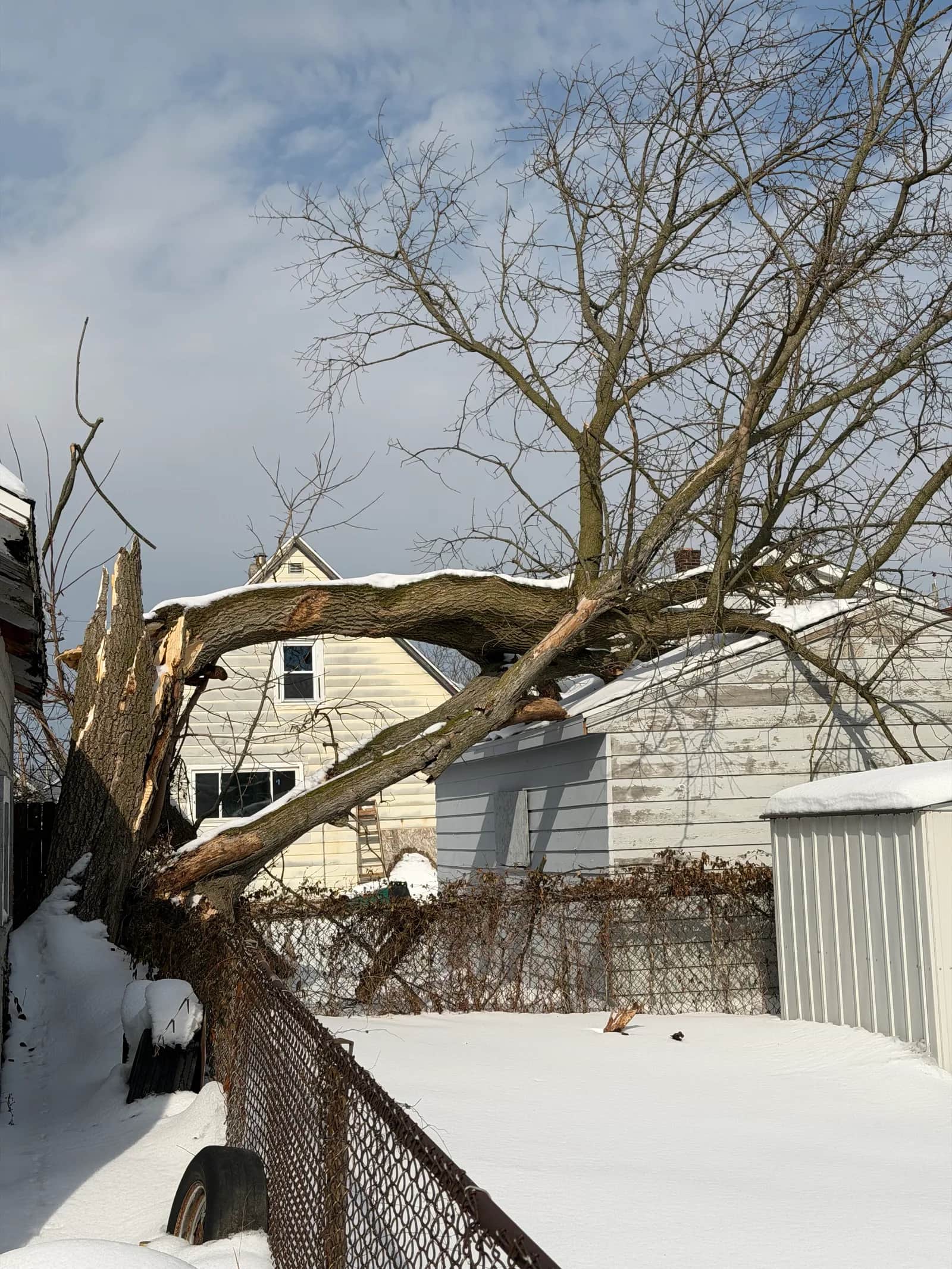
Trees on roofs, decks, or garages require slow, sectional removal so weight is lifted or cut without making damage worse. Expect higher labor time and sometimes crane or specialized rigging — this is usually the top end of fallen tree removal cost.
Blocking a driveway or walkway
A driveway blockage is often an urgent fallen tree removal service call because you need access restored. The cutting itself may be straightforward, but priority scheduling and after-hours response can add cost compared with a flexible weekday slot.
Across a fence line or hung in another tree
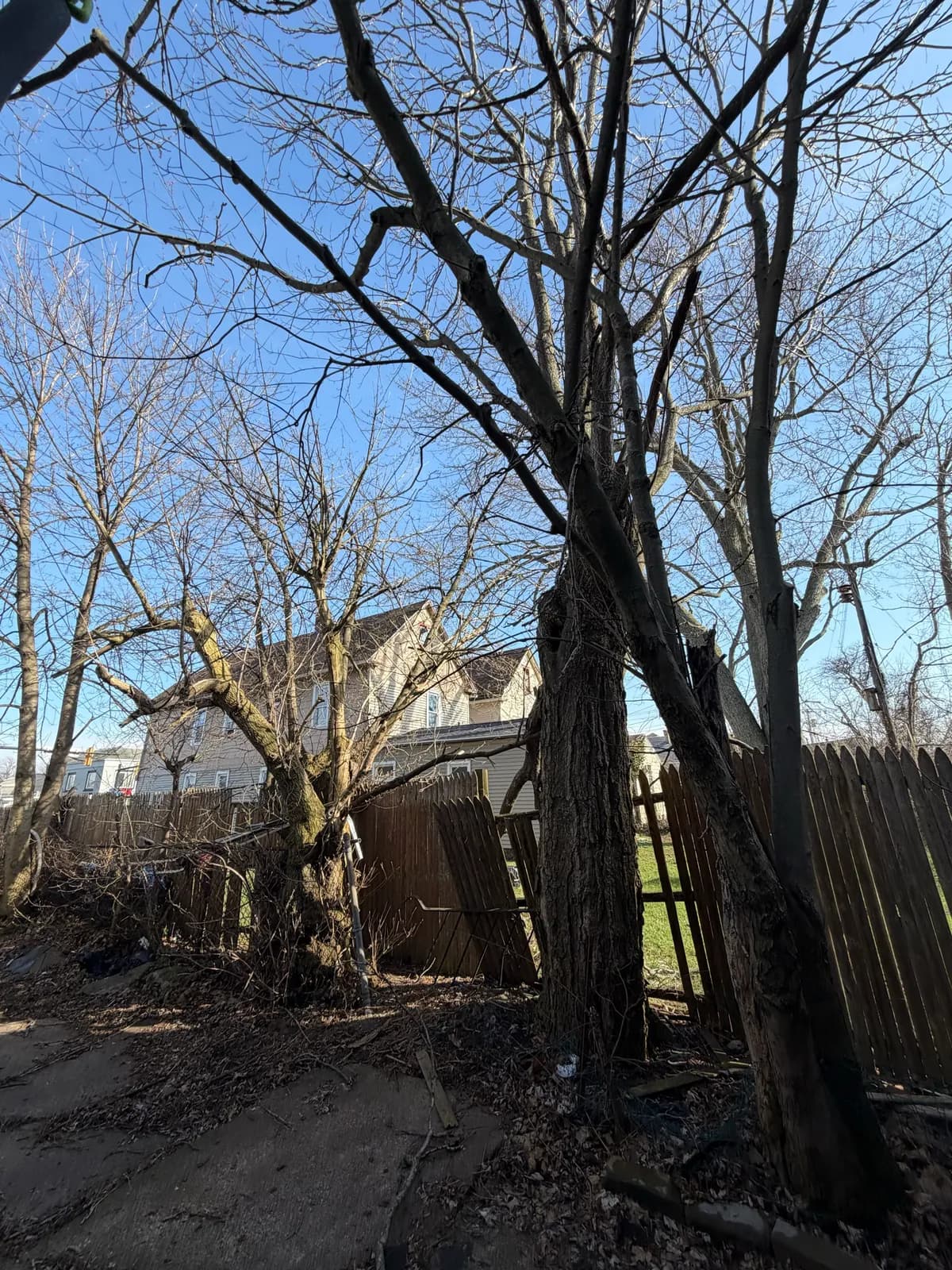
Fence-line falls and hung-up trunks need careful sequencing so wood does not roll, drop, or tear more fencing. Those jobs look "already down" from the street and still take a professional crew longer than a clean open-yard fall.
Typical response timelines in Buffalo
If the tree is on a house, near power lines, or blocking primary access, treat it as urgent — see emergency tree removal: when to call right away. Many urgent fallen-tree jobs are handled same-day or next-day when capacity allows. After major lake-effect or summer storm events, queues grow; non-urgent yard falls may wait a few days. For broader storm cleanup context, read storm damage tree removal in Buffalo NY.
What to do immediately — before the crew arrives
- Safety first: keep people and pets out of the fall zone; assume downed lines are live
- Take clear photos from multiple angles for insurance before moving debris
- Do not cut a hung-up or structure-loaded tree — stored energy can release violently
- Note access for trucks and whether cars need to be moved
- Call a professional fallen tree removal service for an on-site plan and written scope
If neighboring trees still look unstable after the fall, ask the crew to flag remaining hazards. Industry guidance on assessing tree risk and hazards is useful background — but an on-site pro should make the call for your property.
Why professional removal beats DIY on fallen trees
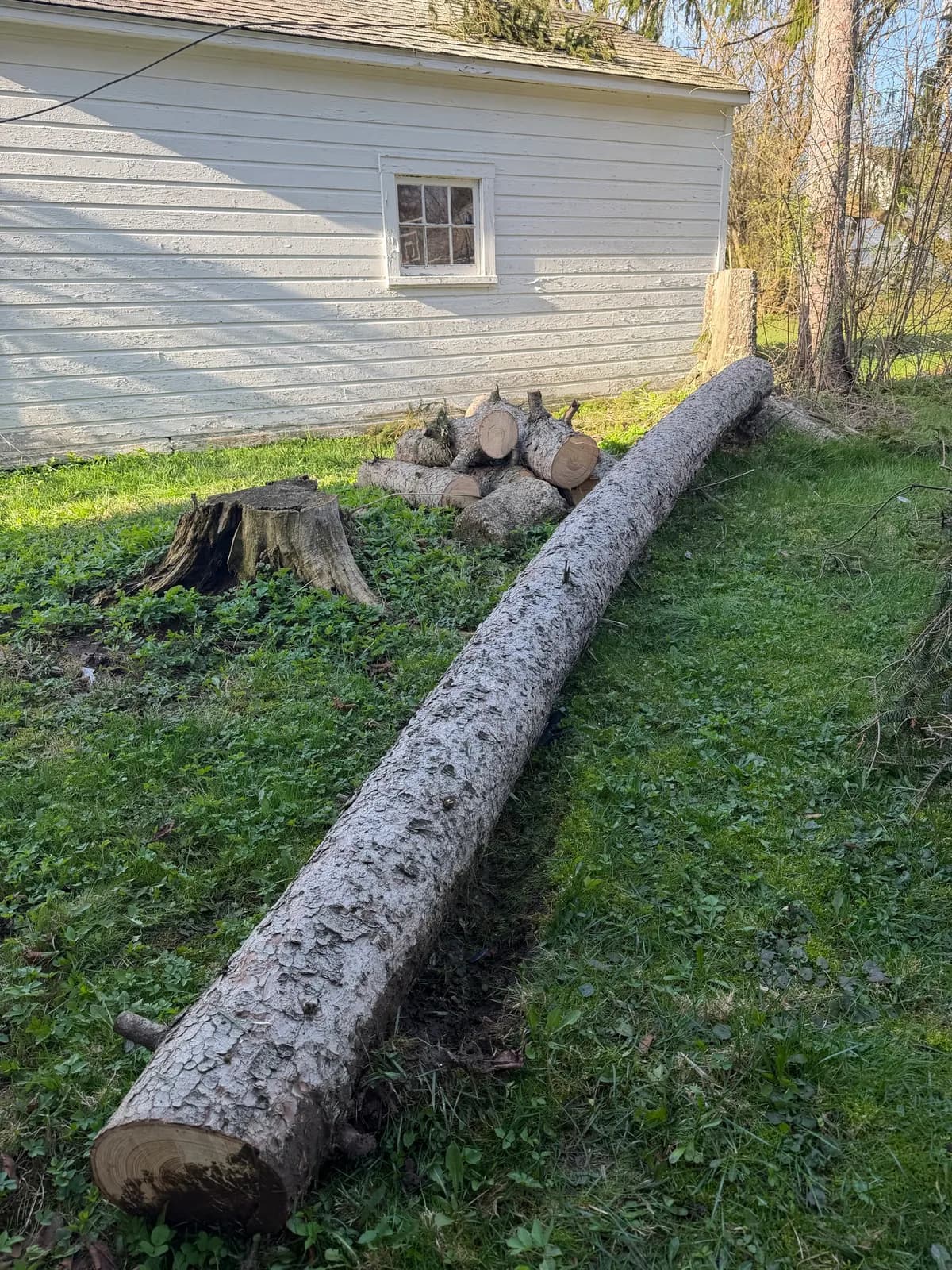
A trunk on the lawn looks approachable with a homeowner chainsaw. Bound wood, root plates, and sections resting on roofs or fences are not. DIY cuts are a common way to turn a fallen tree into personal injury or extra property damage. Professionals bring the saws, the hauling capacity, and the sequence that keeps tension under control.
Buffalo Tree Soldiers provides fallen tree removal and emergency storm response across Buffalo, Amherst, Cheektowaga, Tonawanda, West Seneca, and surrounding Western New York communities. If a tree is down on your property, request a free estimate or call for urgent scheduling — we will assess access, fall location, and the safest clearing plan before cutting starts.