April 30, 2026 · Buffalo Tree Soldiers
Is a Leaning Tree Dangerous? Buffalo Homeowner Guide
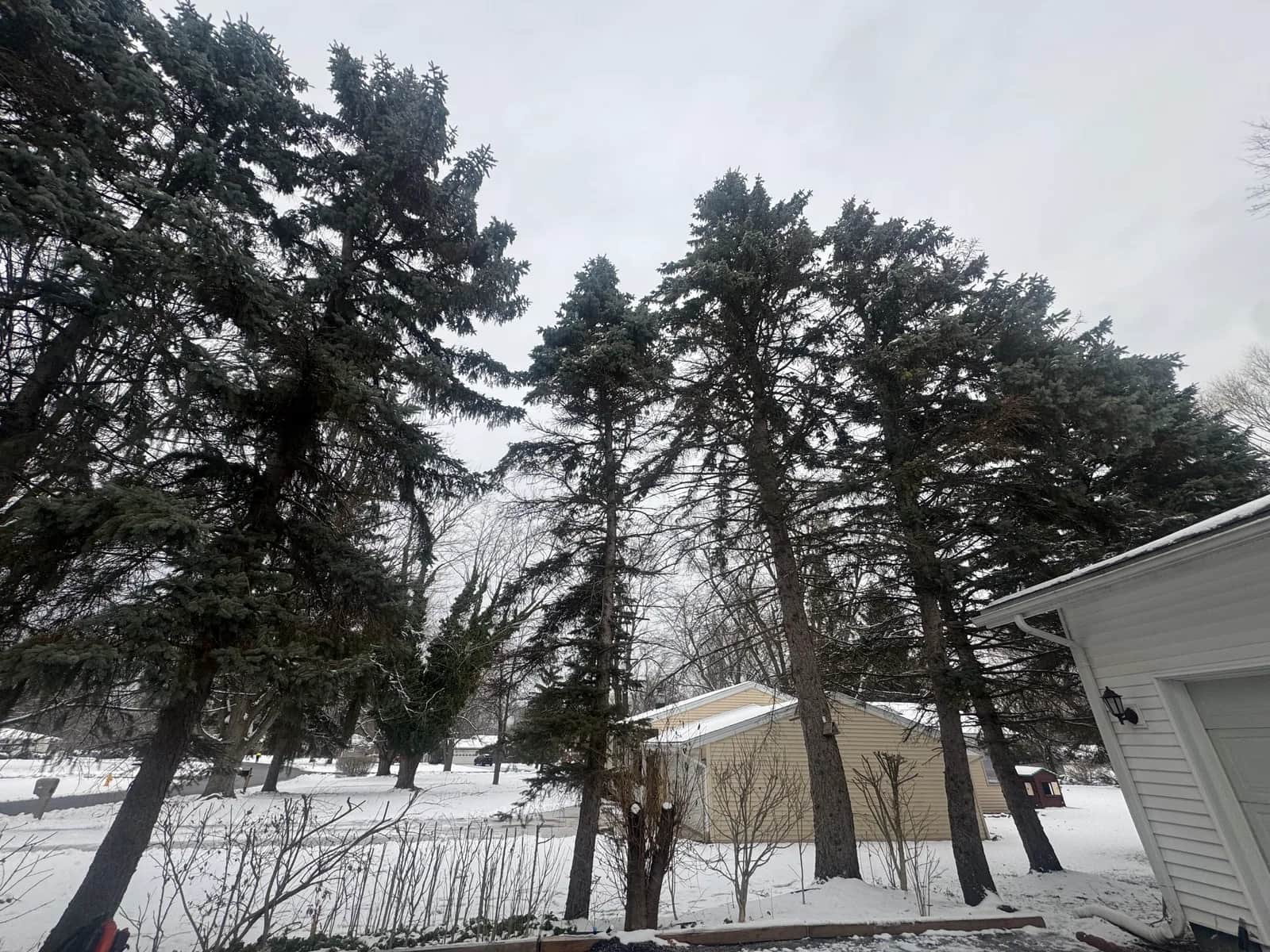
If you are searching for leaning tree dangerous buffalo ny, you are usually looking at a tree that feels different than it did last season. Maybe the trunk angle changed after a wind event, maybe the root flare is lifting, or maybe you noticed fresh cracking in the soil near the base. In Buffalo, these changes matter because heavy wet snow and freeze-thaw cycles can push borderline trees into failure faster than homeowners expect. A slight historical lean is not always a crisis, but a new lean is a different conversation.
Many owners wait because the tree is still green. That can be misleading. A structurally compromised tree can leaf out and still be high risk. The core question for leaning tree dangerous buffalo ny is not appearance alone; it is whether the root system, trunk fibers, and branch architecture still have enough safety margin for the next storm cycle.
In this article
- How to separate old lean from active structural movement
- Why root plate lift is a serious warning sign
- Buffalo weather factors that increase failure probability
- Trim vs remove decisions for leaning trees
- What a professional leaning-tree inspection should include
- Frequently asked homeowner questions
Old Lean vs Active Lean: What Homeowners Miss
Long-standing lean can be stable
Some trees grow with a natural lean for decades. If that lean has not changed, the root collar is firm, and there are no new cracks or heaving soil, the risk profile may remain moderate. That said, stable does not mean ignore. Baseline photos and annual checks are still smart.
New lean after wind or saturated soil is different
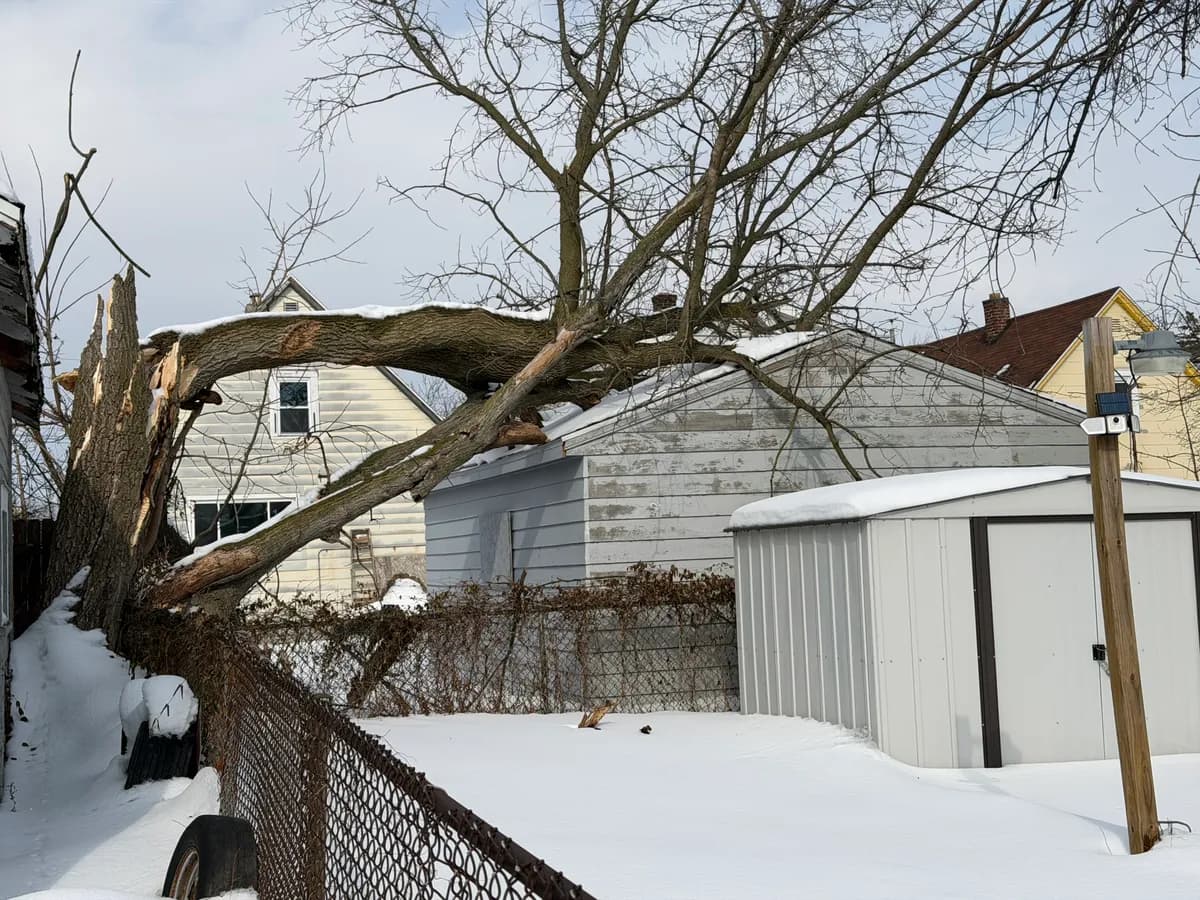
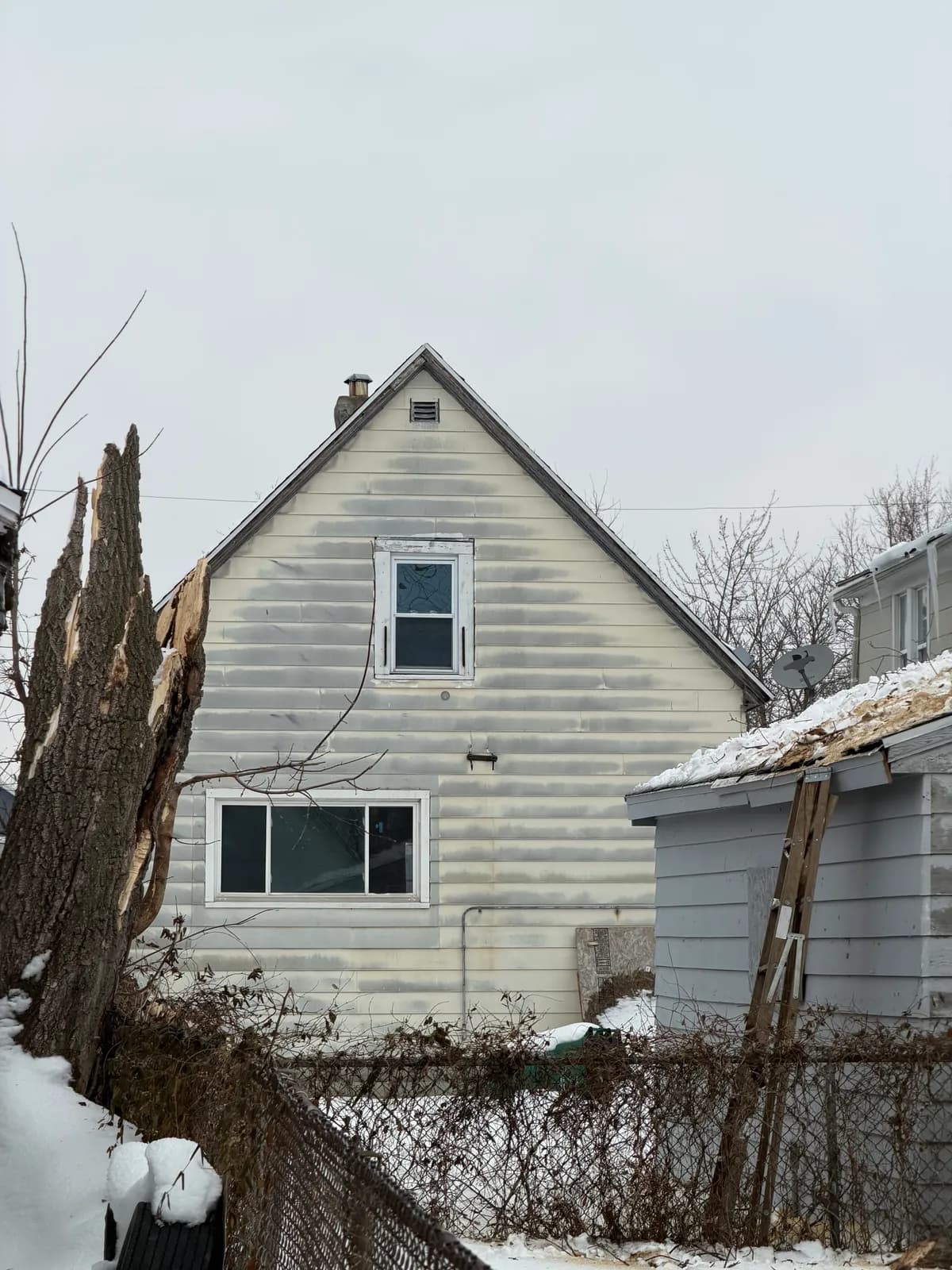
A new angle after a storm, especially with exposed roots or soil separation, is often where leaning tree dangerous buffalo ny becomes urgent. If the target side includes a house wall, roof edge, parked vehicles, or a sidewalk route, reduce exposure immediately and use24/7 emergency tree responsefor hazard stabilization.
Root Plate Movement Is the Real Red Flag
Homeowners often focus on “how many degrees” a tree leans. Arborists focus on anchorage. A tree can tolerate visible lean if roots remain locked. It cannot tolerate progressive root plate movement for long. Signs include:
- lifted soil on the opposite side of lean
- cracking turf around buttress roots
- fresh gaps where trunk meets ground
- new tilt in nearby fence lines or hardscape alignment
In leaning tree dangerous buffalo ny scenarios, root movement is usually a higher-priority signal than canopy aesthetics.
Buffalo-Specific Conditions That Raise Risk
Buffalo lots with mature maples and aging ash often have shallow utility corridors, older drainage patterns, and compacted soil zones near driveways. These site realities increase stress during wind and wet snow events.
The freeze-thaw cycle also matters. Water enters cracks, freezes, expands, and weakens support tissue. Then a moderate wind event can trigger disproportionate movement. For local policy context, reviewCity of Buffalo tree regulations. For structural arboriculture standards, useISA arborist guidanceandUSDA Urban Forestry resources.
Trim, Remove, or Monitor: Practical Decision Guidance
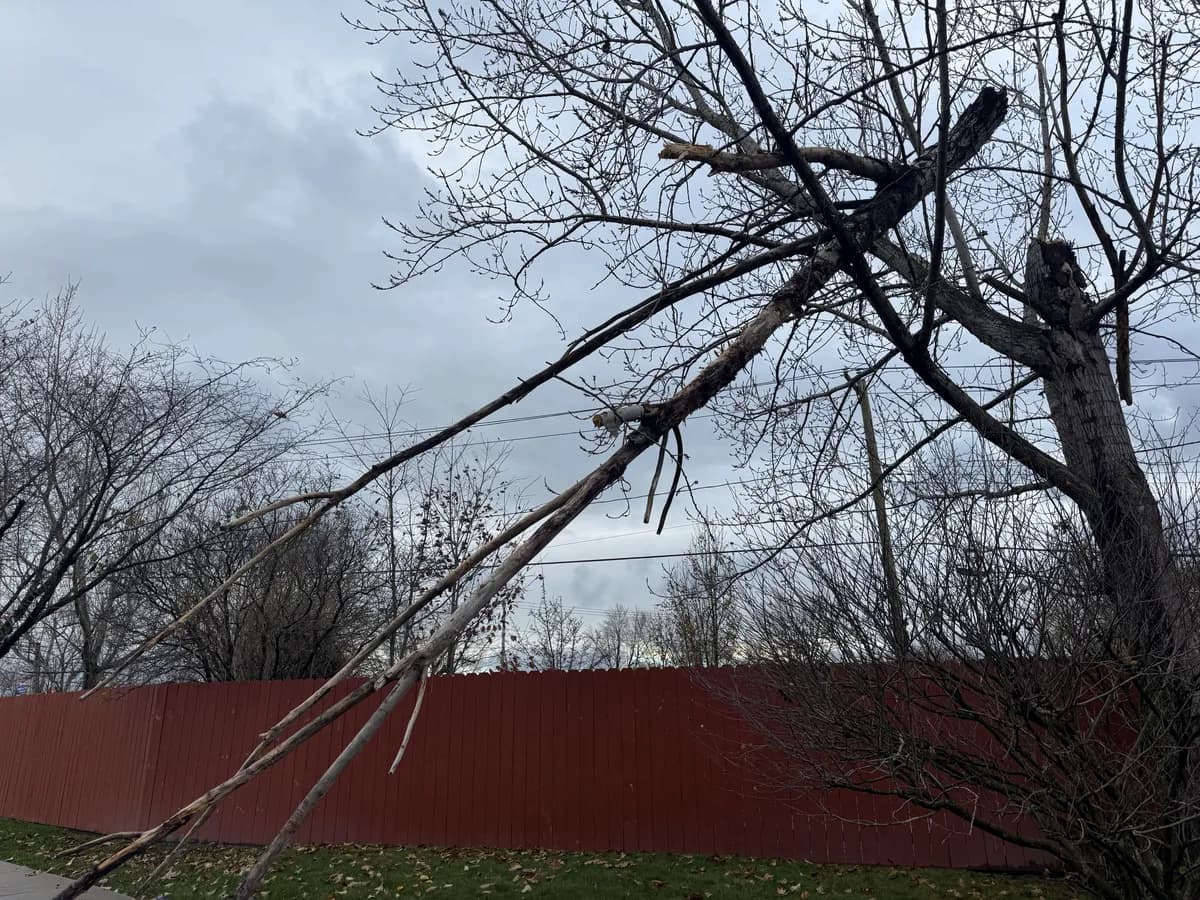
When trimming can work
If root anchorage is stable and risk is mostly canopy imbalance,targeted tree trimming optionscan reduce leverage and improve load distribution. Crown reduction should be structural, not cosmetic topping.
When removal is safer
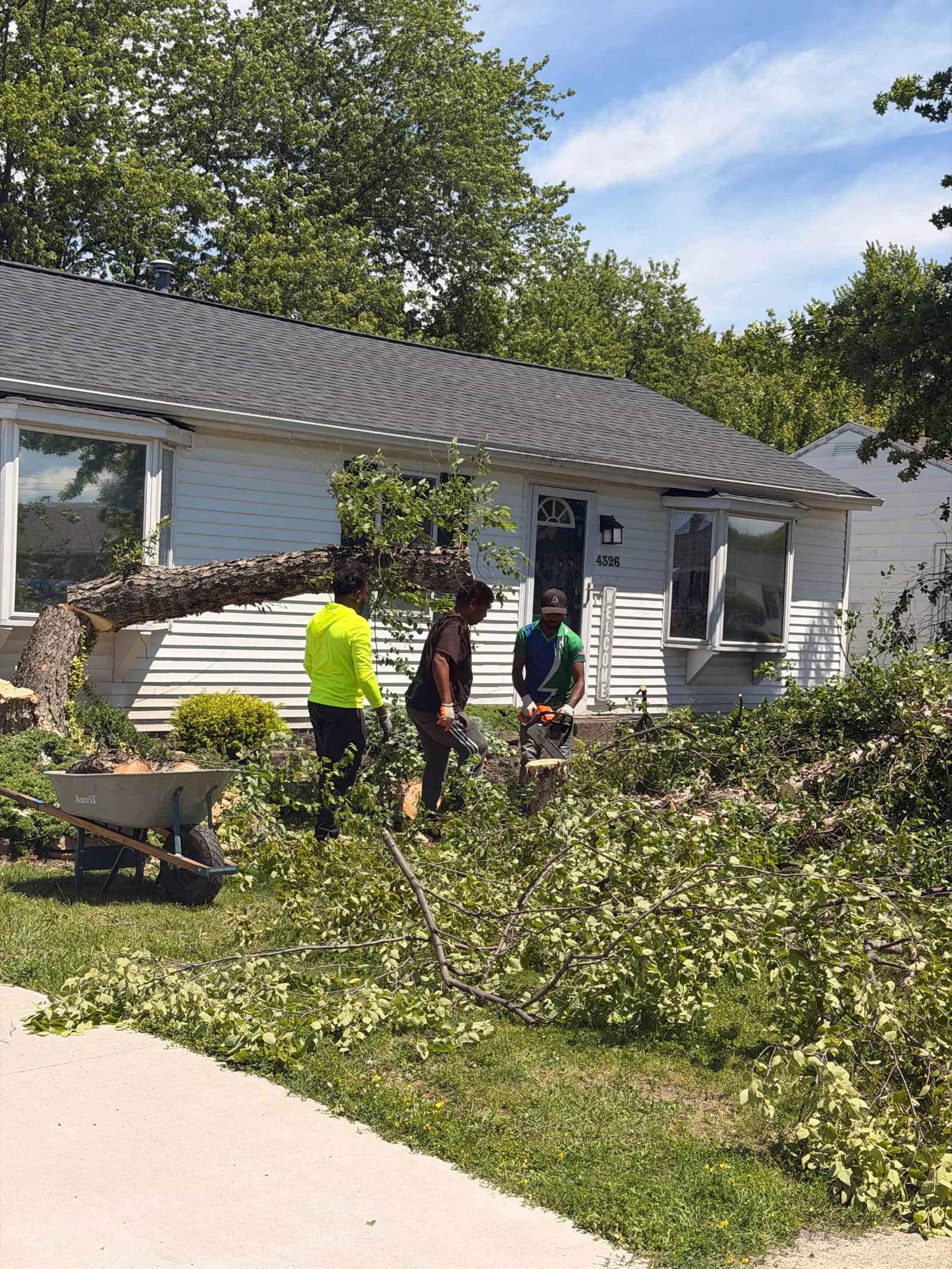
If the tree keeps moving, roots are lifting, or trunk defects are progressing near occupied targets,professional tree removal in Buffalois usually the lower-risk path. If post-removal use of the area matters, includecomplete stump grinding support.
When monitoring is reasonable
Monitoring is only valid with photos, date-stamped observations, and explicit triggers. For leaning tree dangerous buffalo ny conditions, monitoring without criteria is not safety planning.
What a Good Inspection Should Deliver
A quality estimate should explain structural findings in plain language, not only a price number. You should receive:
- defect summary (roots, trunk, crown)
- target exposure map
- recommended action with rationale
- access and protection plan
- cleanup and timeline scope
If you need multi-tree prioritization,full-service local tree careplanning can stage work by risk and budget.
Buffalo Case Example
A West Seneca homeowner called after noticing a maple leaning two to three inches farther toward a detached garage following a thaw plus wind event. The canopy was still full, but the root flare showed fresh lift and the lawn had a crescent crack pattern. This is exactly where leaning tree dangerous buffalo ny should move from “watch it” to “act now.” The final scope used controlled removal because structural reliability had already dropped below a safe threshold.
Homeowner checklist before approving work
Photograph the trunk base and soil ring from four directions.
Keep cars and foot traffic out of likely impact zones.
Ask for written trim-vs-remove rationale.
Confirm insurance and cleanup details in writing.
Reinspect after every significant wind/snow event if delayed.
Useareas we serve across Western New Yorkto confirm local coverage.
Conclusion
If your property conditions match leaning tree dangerous buffalo ny, timing matters more than perfect certainty. A documented inspection now is safer than waiting for a larger weather event to make the decision for you. Request a no-pressure assessment and choose the option that protects people first, then property, then budget.
Frequently Asked Questions
How often should I recheck a leaning tree in Buffalo?
For low-risk historical lean, recheck at least annually and after major storms. For active leaning tree dangerous buffalo ny indicators, recheck immediately and schedule professional inspection without delay.
Can cabling fix a leaning tree instead of removing it?
Sometimes, when anchorage is stable and defects are mostly crown-related. If root plate movement is active, cabling alone rarely resolves core failure risk.
Is a tree leaning away from my house still dangerous?
It can be. Failure direction can change, and limbs can still strike structures or public paths. Evaluate full target exposure, not only trunk direction.
Buffalo field scenario 1
A realistic local example of lean progression and root plate instability helps explain why timing decisions matter. In this scenario, homeowners dealing with leaning tree dangerous buffalo ny noticed gradual change after two weather cycles, then sharper progression after one high-wind event. The key lesson is that visible trend matters more than one-time appearance. By documenting condition, comparing two itemized scopes, and prioritizing life-safety targets first, the final plan reduced both risk and total disruption. For Buffalo-area lots, this method avoids reactive emergency decisions and keeps work aligned with access, cleanup, and long-term property use.
Another practical takeaway is communication. Owners who discuss drop zones, site protection, and cleanup details before work begins usually avoid most post-job disputes. When the team explains why trim, removal, or monitoring is recommended, homeowners can make confident decisions under pressure. This is especially important when leaning tree dangerous buffalo ny involves structures, driveways, sidewalks, or neighboring boundaries where consequences are higher.
From a budgeting standpoint, staged planning is often better than deferral. Addressing highest-risk components first, then scheduling lower-priority corrections, usually costs less than emergency response after avoidable failure. In Buffalo conditions, that strategy is a reliable way to manage lean progression and root plate instability while preserving safety and property function.
Buffalo field scenario 2
A realistic local example of lean progression and root plate instability helps explain why timing decisions matter. In this scenario, homeowners dealing with leaning tree dangerous buffalo ny noticed gradual change after two weather cycles, then sharper progression after one high-wind event. The key lesson is that visible trend matters more than one-time appearance. By documenting condition, comparing two itemized scopes, and prioritizing life-safety targets first, the final plan reduced both risk and total disruption. For Buffalo-area lots, this method avoids reactive emergency decisions and keeps work aligned with access, cleanup, and long-term property use.
Another practical takeaway is communication. Owners who discuss drop zones, site protection, and cleanup details before work begins usually avoid most post-job disputes. When the team explains why trim, removal, or monitoring is recommended, homeowners can make confident decisions under pressure. This is especially important when leaning tree dangerous buffalo ny involves structures, driveways, sidewalks, or neighboring boundaries where consequences are higher.
From a budgeting standpoint, staged planning is often better than deferral. Addressing highest-risk components first, then scheduling lower-priority corrections, usually costs less than emergency response after avoidable failure. In Buffalo conditions, that strategy is a reliable way to manage lean progression and root plate instability while preserving safety and property function.