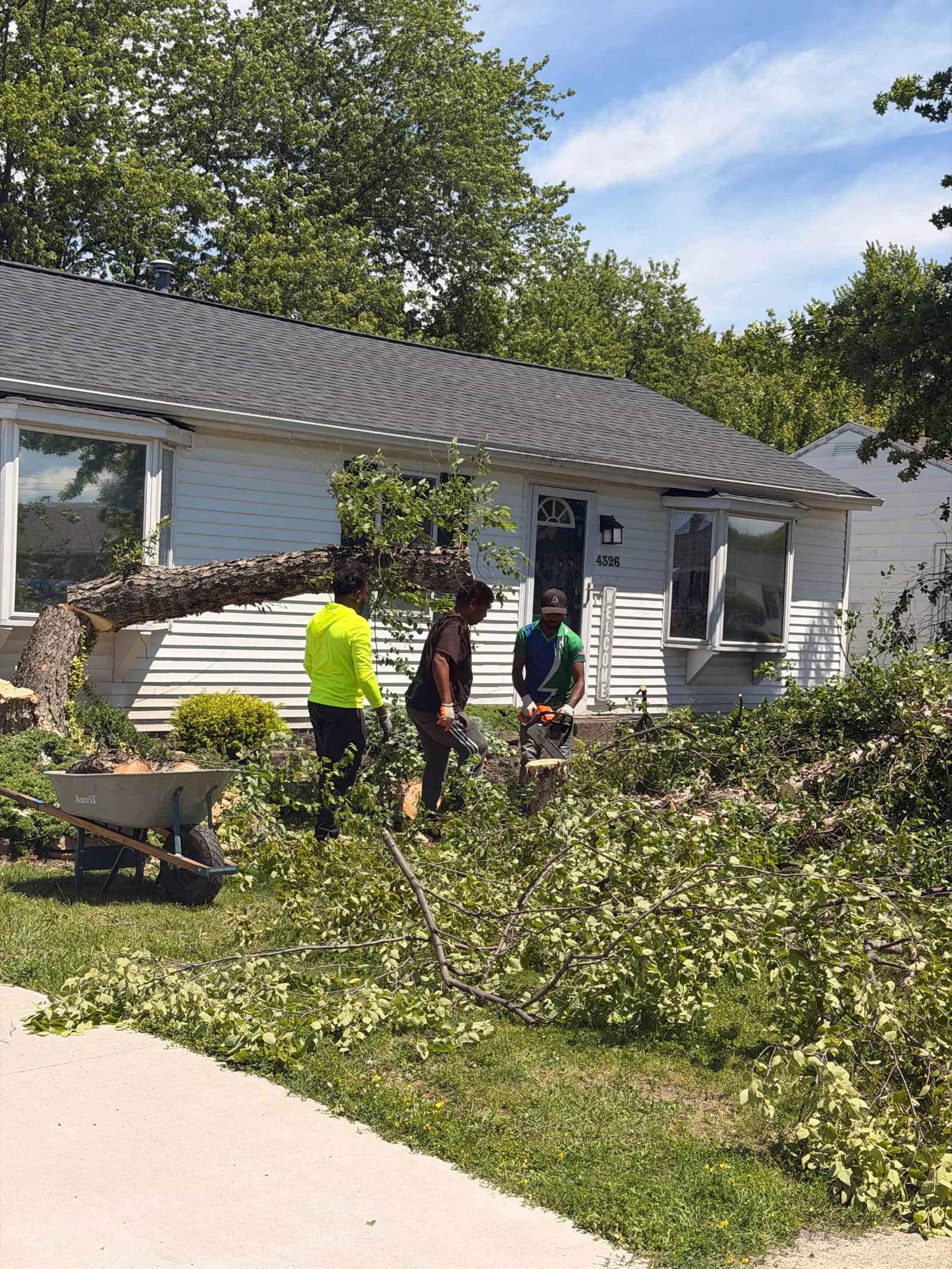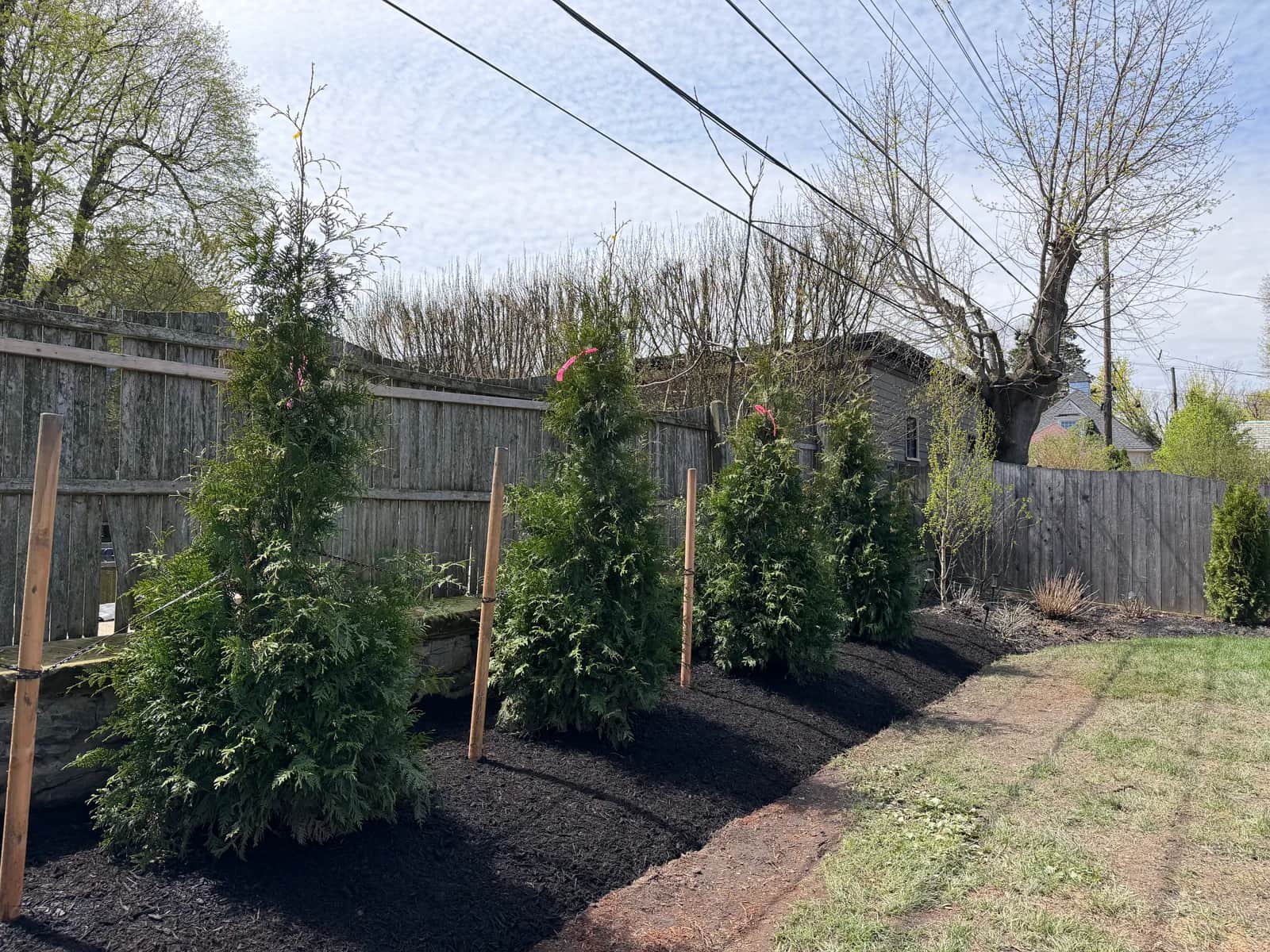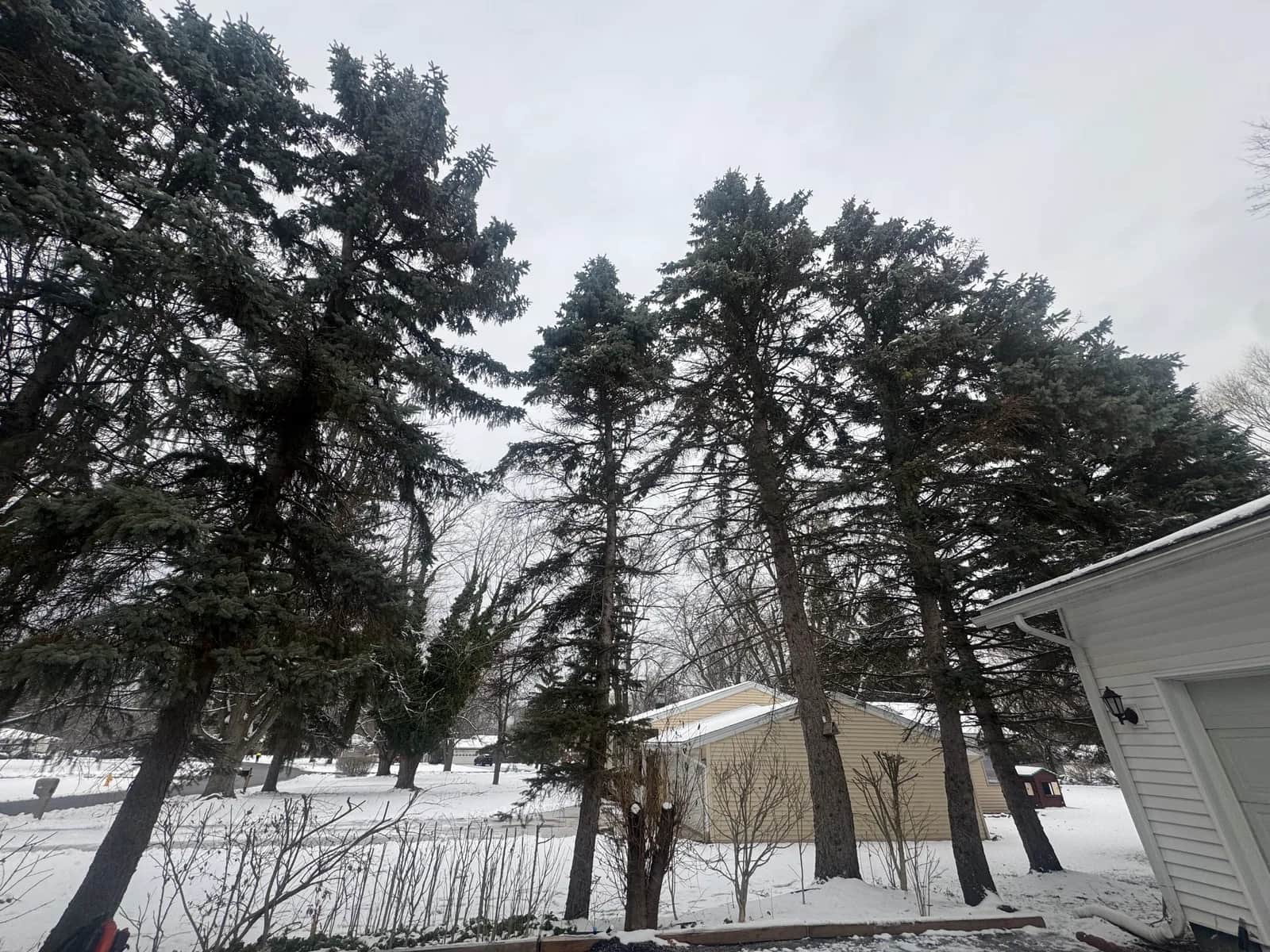
Buffalo and Western New York are no strangers to severe weather. Ice storms, lake-effect snow events, and summer thunderstorms with high winds regularly damage or destroy trees across the region — from older neighborhoods in Buffalo and Tonawanda to newer subdivisions in Amherst and West Seneca. When a storm hits, knowing what to do in the first 24 hours can protect your family, your property, and your claim. This guide covers emergency tree service response from start to finish.
Step 1: Stay safe — power lines and unstable trees
Before anything else: treat every downed power line as live, even if it looks dead. Call National Grid (1-800-867-5222) to report any lines down on or near your property. Do not touch or approach lines, and keep children and pets far away. For trees that are still standing but visibly unstable — leaning further than normal, cracked at the base, or hanging against another structure — stay out of the fall zone until a professional assesses the situation.
Step 2: Document everything for insurance
Before any cleanup or removal begins, take comprehensive photos and video of all damage. Capture wide shots showing the full scope, close-ups of where the tree or branch broke, any impact to structures, and the state of the fallen material. This documentation is critical for insurance claims. Note the date and time, and if possible, save any weather reports from the event as additional evidence.
Step 3: Assess the hazard level
- High hazard (call immediately): tree on or penetrating a structure, hanging limb over occupied space, tree blocking emergency access, power lines involved
- Medium hazard (schedule within 24–48 hrs): major tree down in yard but not hitting structure, large limb blocking driveway
- Low hazard (can schedule normally): small branch falls, tree debris to clean up, cosmetic damage only
Step 4: Call the right people
For power line issues: call National Grid first. For trees and debris: call a licensed tree service. For damage to your home: call your insurance company before repairs begin. The order matters — insurers want to document conditions before cleanup, and your tree service can't safely work near live lines. Don't attempt to clear large fallen trees or dislodge hung-up branches yourself — these situations kill and injure homeowners every year.
Step 5: What to expect from the crew
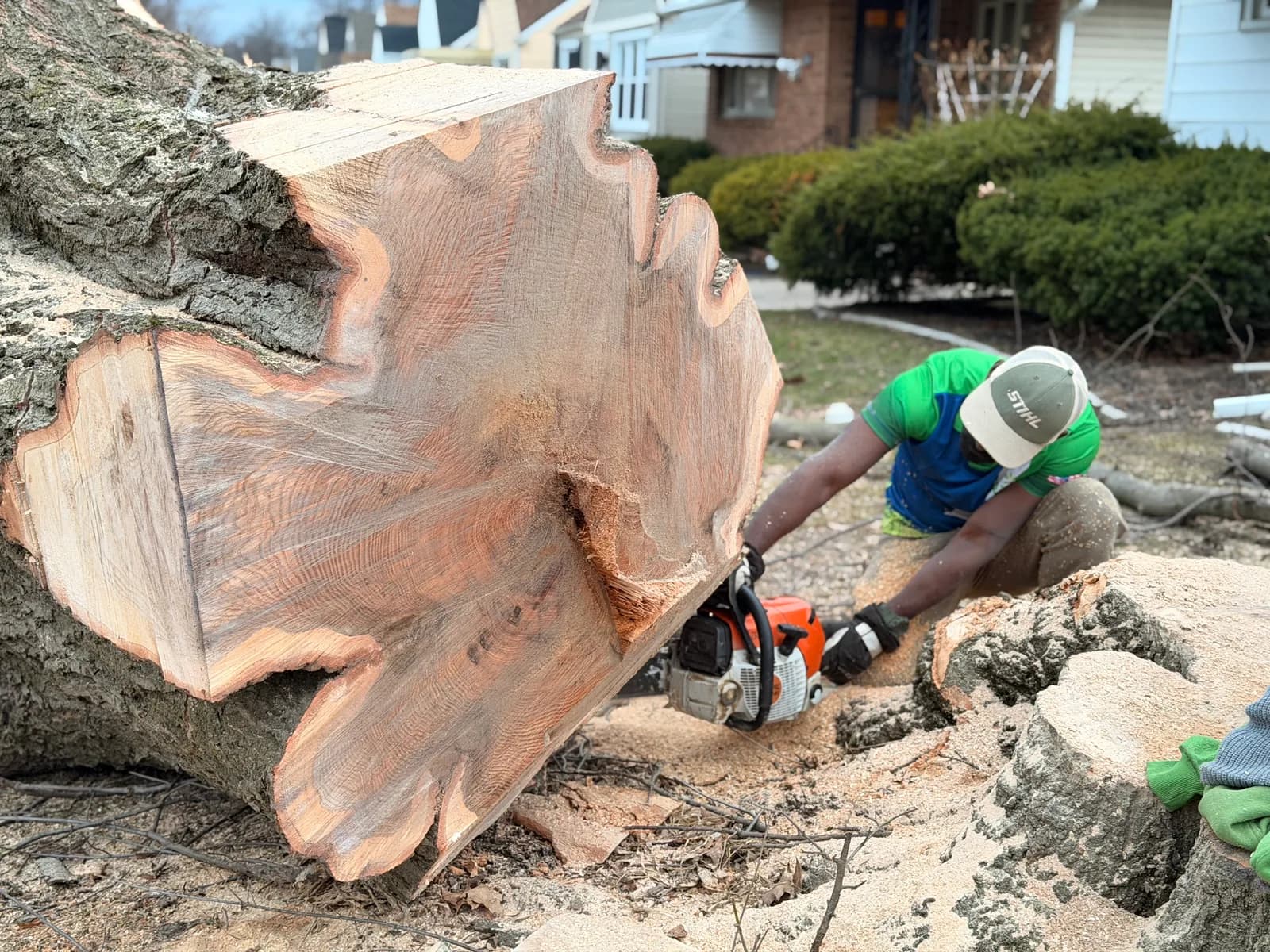
A professional emergency tree service crew will assess the situation on arrival before cutting anything. They'll identify the safest sequence for removal, position equipment to avoid causing additional damage, and work systematically. On jobs involving structures, they'll often coordinate with the homeowner about the cleanup sequence and whether the debris should be staged for the insurance adjuster before removal.
How to prevent damage before the next storm
The best time to deal with storm damage is before the storm. Tree trimming to reduce crown density and remove deadwood significantly reduces the chance of branch failures in high wind or heavy snow. Our arborist services include pre-storm risk assessments that identify which trees on your property are most likely to cause problems. Contact us for a free assessment in Buffalo, Amherst, Cheektowaga, Tonawanda, or West Seneca.
Not sure if your situation is a true emergency? Read our guide on when to call for emergency tree removal. If a neighbor's tree was involved, also review who is responsible for a fallen tree in Buffalo NY. For power line safety, National Grid's downed wire safety guide has step-by-step instructions for what to do when lines are involved.