April 30, 2026 · Buffalo Tree Soldiers
Snow-Loaded Branch Failure Is Predictable in Many Buffalo Yards
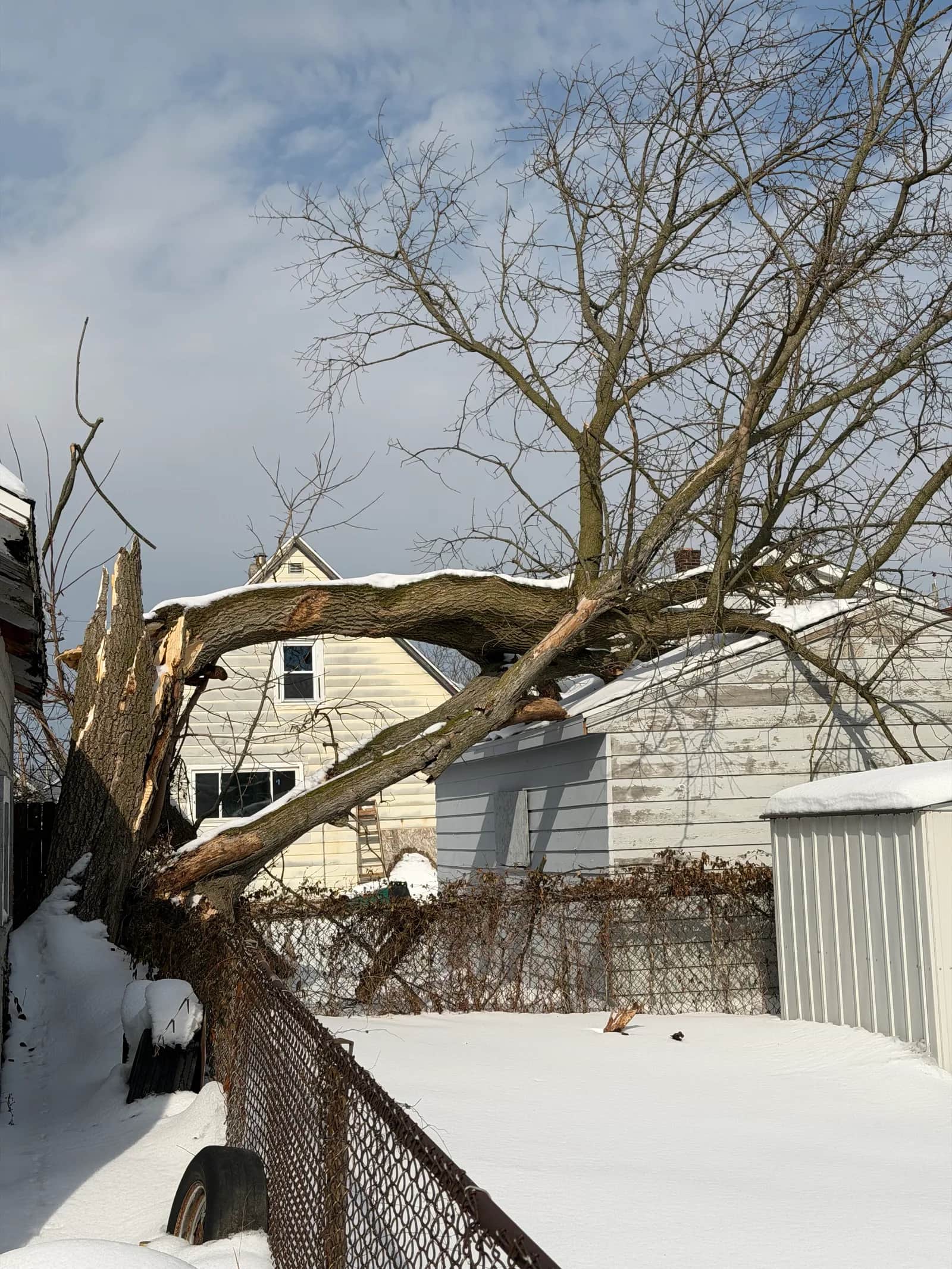
People searching snow breaking tree branches buffalo ny are often reacting to repeated winter branch loss and wondering whether it can be prevented. The answer is yes in many cases. Heavy wet snow and ice do not break branches randomly—they expose existing weaknesses such as deadwood, poor branch unions, unbalanced canopy weight, and deferred maintenance.
Buffalo winters create exactly the loading profile that stresses these weak points. If your property has large mature limbs over roofs, walkways, or parking areas, prevention work is usually cheaper and safer than repeated emergency cleanup.
In this article
- How snow and ice increase branch load
- Structural defects most likely to fail first
- Prevention pruning strategies that work
- What to do after a branch failure event
- Seasonal timing for Buffalo homeowners
- Frequently asked questions
How Snow and Ice Cause Branch Failure
Wet snow accumulation
Wet snow adheres to branch surfaces and adds load quickly, especially on dense canopies that trap precipitation.
Ice accretion and leverage shift
Ice changes branch mass distribution and increases stress at weak unions. In snow breaking tree branches buffalo ny situations, this is a common mechanism in sudden failures.
Wind interaction
When wind acts on loaded branches, dynamic bending increases. Defects that seemed minor under summer conditions can fail abruptly in winter storms.
Defects That Fail First
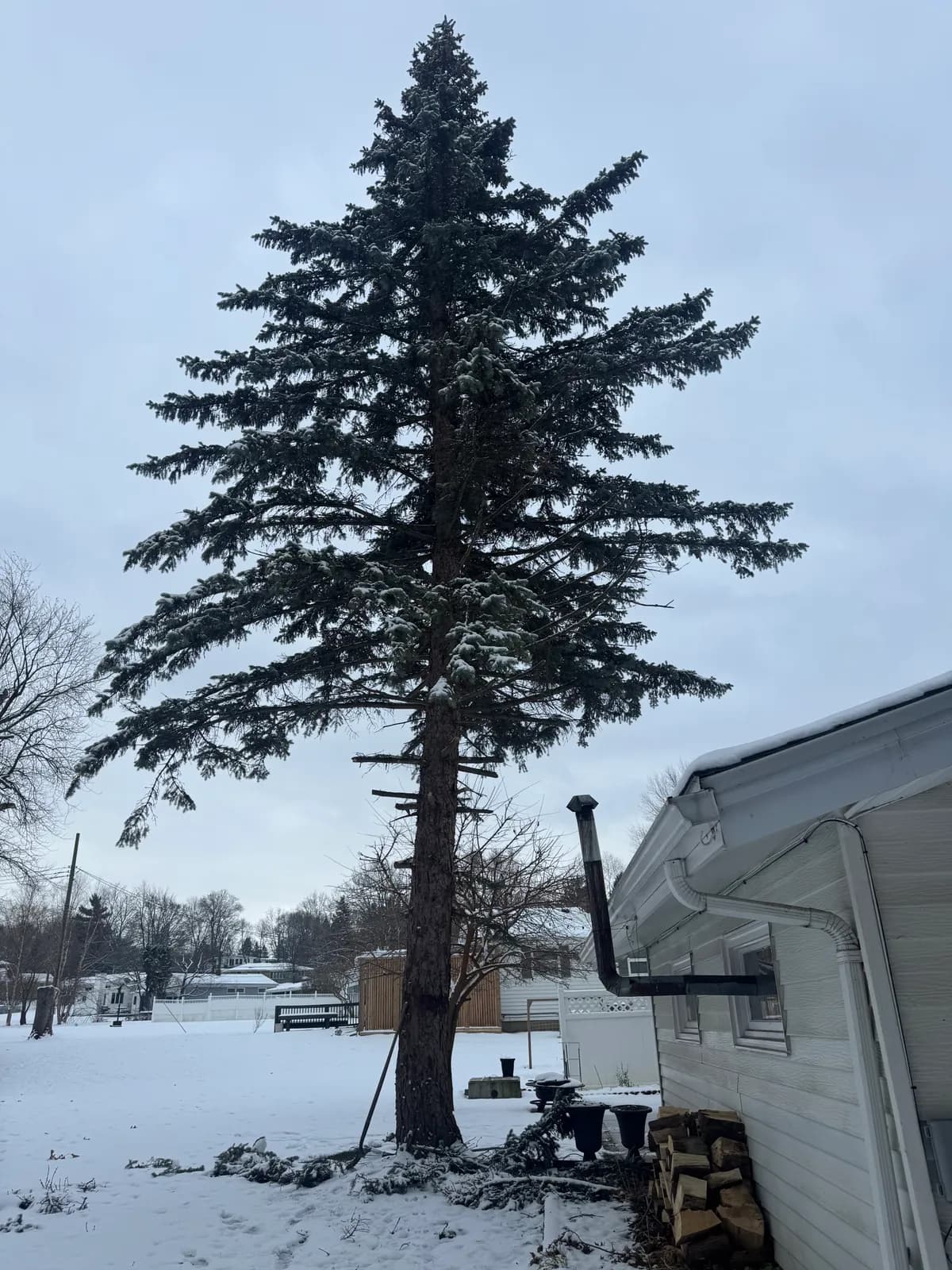
- dead or decayed upper-crown limbs
- included-bark unions
- long end-weighted limbs with weak taper
- previously cracked branches from past storms
- crowns with poor structural pruning history
Properties with these indicators should be prioritized forpreventive winter pruning strategiesbefore peak storm windows.
Prevention Strategy for Buffalo Homeowners
Structural pruning before major winter load
Proactive reduction and deadwood removal can lower branch failure probability significantly.
Storm follow-up inspections
After wind events, reassess trees even if no immediate break occurred. Small defects now can become major winter failures later.
Removal for advanced structural risk
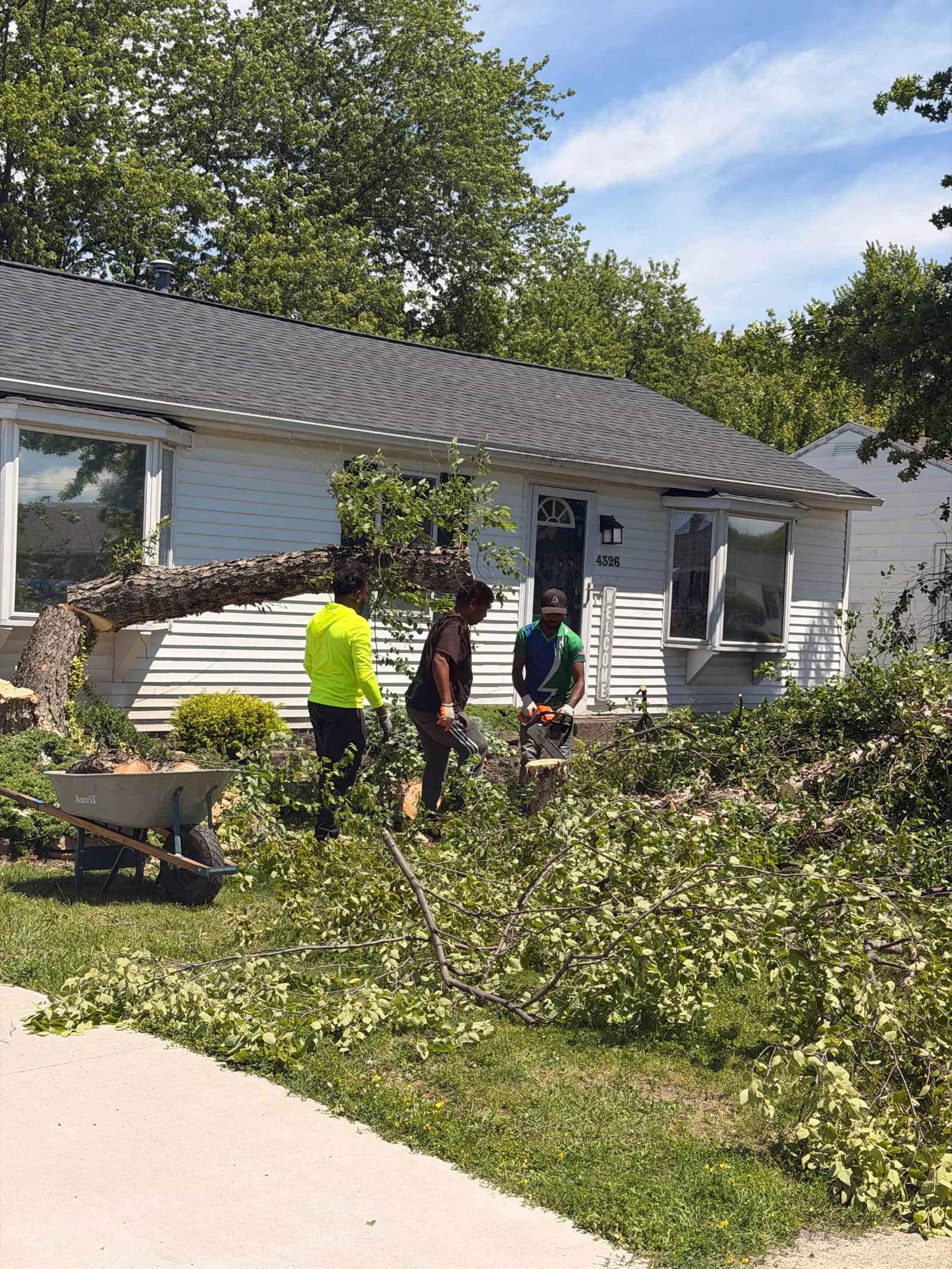
If defects are systemic and target exposure is high,professional tree removal in Buffalomay be safer than recurring emergency response. Addcomplete stump grinding supportwhere site restoration is planned.
What to Do After a Branch Comes Down
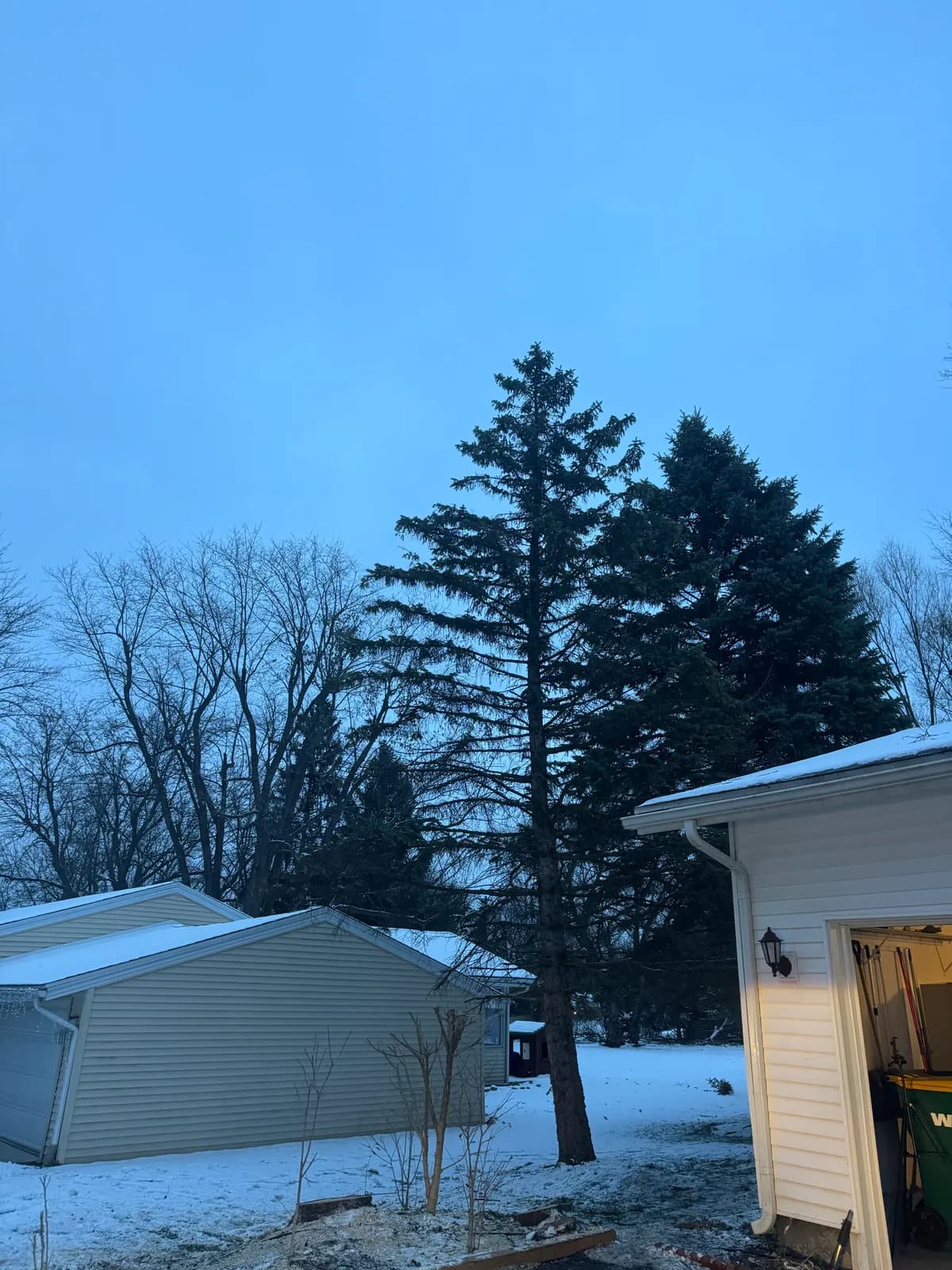
Secure area and prevent foot/vehicle access.
Check for additional hanging limbs or trunk cracks.
Document damage before cleanup when safe.
Use24/7 emergency tree responseif active hazard remains.
Schedule post-event structural review for remaining canopy.
For standards and educational references, useISA arborist guidance,USDA Urban Forestry resources, and local context fromCity of Buffalo tree regulations.
Buffalo Timing: When to Act
Properties exposed to open wind corridors near Lake Erie and broader suburban canopy zones in Amherst and Clarence typically see more asymmetrical snow loading, which changes branch-failure probability from one side of the crown to the other.
Late summer through fall is often ideal for preventive pruning, but in-season winter corrections can still reduce risk when conditions allow safe access. The key mistake is delaying until repeated failures force emergency scheduling.
If you manage multiple trees with mixed risk levels,seasonal canopy risk planningplanning can phase work intelligently. Useareas we serve across Western New Yorkto confirm regional coverage.
Homeowner checklist before the next storm
- Identify limbs over roofs, cars, and walkways.
- Document deadwood and suspect unions with photos.
- Prioritize trees with prior storm failure history.
- Schedule corrective pruning before heavy forecast periods.
- Keep emergency contact ready for active hazards.
- Review insurance documentation steps in advance.
Conclusion
In snow breaking tree branches buffalo ny scenarios, prevention beats cleanup. Branch failure risk can often be reduced with targeted structural work before severe loading events. A local inspection now helps you avoid avoidable damage later.
Frequently Asked Questions
Can healthy trees still lose branches during heavy snow?
Yes. Health helps, but load mechanics still apply. Structural pruning and deadwood removal reduce break probability by lowering leverage and weak-union stress.
Is winter pruning worthwhile once snow season has started?
Usually yes, if access and weather windows are safe. In-season hazard reduction is often preferable to waiting for another snow cycle to test compromised limbs.
Should one broken limb mean full removal?
Not by itself. One failure should trigger a full structural review of the remaining canopy, attachment points, trunk integrity, and target zones before choosing removal.
Buffalo field scenario 1
A realistic local example of snow and ice branch-load failures helps explain why timing decisions matter. In this scenario, homeowners dealing with snow breaking tree branches buffalo ny noticed gradual change after two weather cycles, then sharper progression after one high-wind event. The key lesson is that visible trend matters more than one-time appearance. By documenting condition, comparing two itemized scopes, and prioritizing life-safety targets first, the final plan reduced both risk and total disruption. For Buffalo-area lots, this method avoids reactive emergency decisions and keeps work aligned with access, cleanup, and long-term property use.
Another practical takeaway is communication. Owners who discuss drop zones, site protection, and cleanup details before work begins usually avoid most post-job disputes. When the team explains why trim, removal, or monitoring is recommended, homeowners can make confident decisions under pressure. This is especially important when snow breaking tree branches buffalo ny involves structures, driveways, sidewalks, or neighboring boundaries where consequences are higher.
From a budgeting standpoint, staged planning is often better than deferral. Addressing highest-risk components first, then scheduling lower-priority corrections, usually costs less than emergency response after avoidable failure. In Buffalo conditions, that strategy is a reliable way to manage snow and ice branch-load failures while preserving safety and property function.
Buffalo field scenario 2
A realistic local example of snow and ice branch-load failures helps explain why timing decisions matter. In this scenario, homeowners dealing with snow breaking tree branches buffalo ny noticed gradual change after two weather cycles, then sharper progression after one high-wind event. The key lesson is that visible trend matters more than one-time appearance. By documenting condition, comparing two itemized scopes, and prioritizing life-safety targets first, the final plan reduced both risk and total disruption. For Buffalo-area lots, this method avoids reactive emergency decisions and keeps work aligned with access, cleanup, and long-term property use.
Another practical takeaway is communication. Owners who discuss drop zones, site protection, and cleanup details before work begins usually avoid most post-job disputes. When the team explains why trim, removal, or monitoring is recommended, homeowners can make confident decisions under pressure. This is especially important when snow breaking tree branches buffalo ny involves structures, driveways, sidewalks, or neighboring boundaries where consequences are higher.
From a budgeting standpoint, staged planning is often better than deferral. Addressing highest-risk components first, then scheduling lower-priority corrections, usually costs less than emergency response after avoidable failure. In Buffalo conditions, that strategy is a reliable way to manage snow and ice branch-load failures while preserving safety and property function.
Buffalo field scenario 3
A realistic local example of snow and ice branch-load failures helps explain why timing decisions matter. In this scenario, homeowners dealing with snow breaking tree branches buffalo ny noticed gradual change after two weather cycles, then sharper progression after one high-wind event. The key lesson is that visible trend matters more than one-time appearance. By documenting condition, comparing two itemized scopes, and prioritizing life-safety targets first, the final plan reduced both risk and total disruption. For Buffalo-area lots, this method avoids reactive emergency decisions and keeps work aligned with access, cleanup, and long-term property use.
Another practical takeaway is communication. Owners who discuss drop zones, site protection, and cleanup details before work begins usually avoid most post-job disputes. When the team explains why trim, removal, or monitoring is recommended, homeowners can make confident decisions under pressure. This is especially important when snow breaking tree branches buffalo ny involves structures, driveways, sidewalks, or neighboring boundaries where consequences are higher.
From a budgeting standpoint, staged planning is often better than deferral. Addressing highest-risk components first, then scheduling lower-priority corrections, usually costs less than emergency response after avoidable failure. In Buffalo conditions, that strategy is a reliable way to manage snow and ice branch-load failures while preserving safety and property function.
For homeowners evaluating snow breaking tree branches buffalo ny, documented trend analysis and early intervention usually produce safer outcomes than delayed, weather-driven decisions.
For homeowners evaluating snow breaking tree branches buffalo ny, one additional pre-storm inspection can prevent avoidable winter break events.