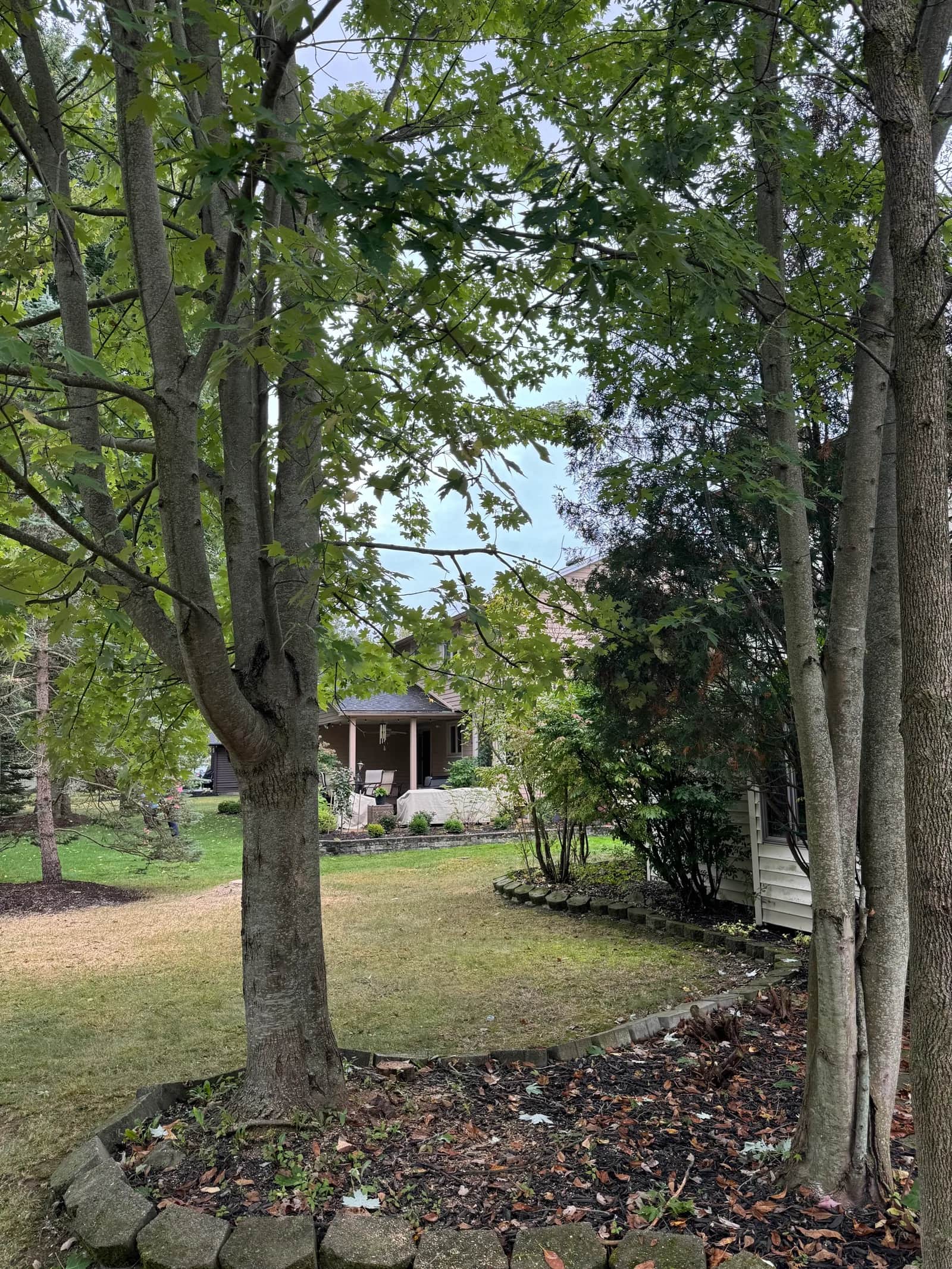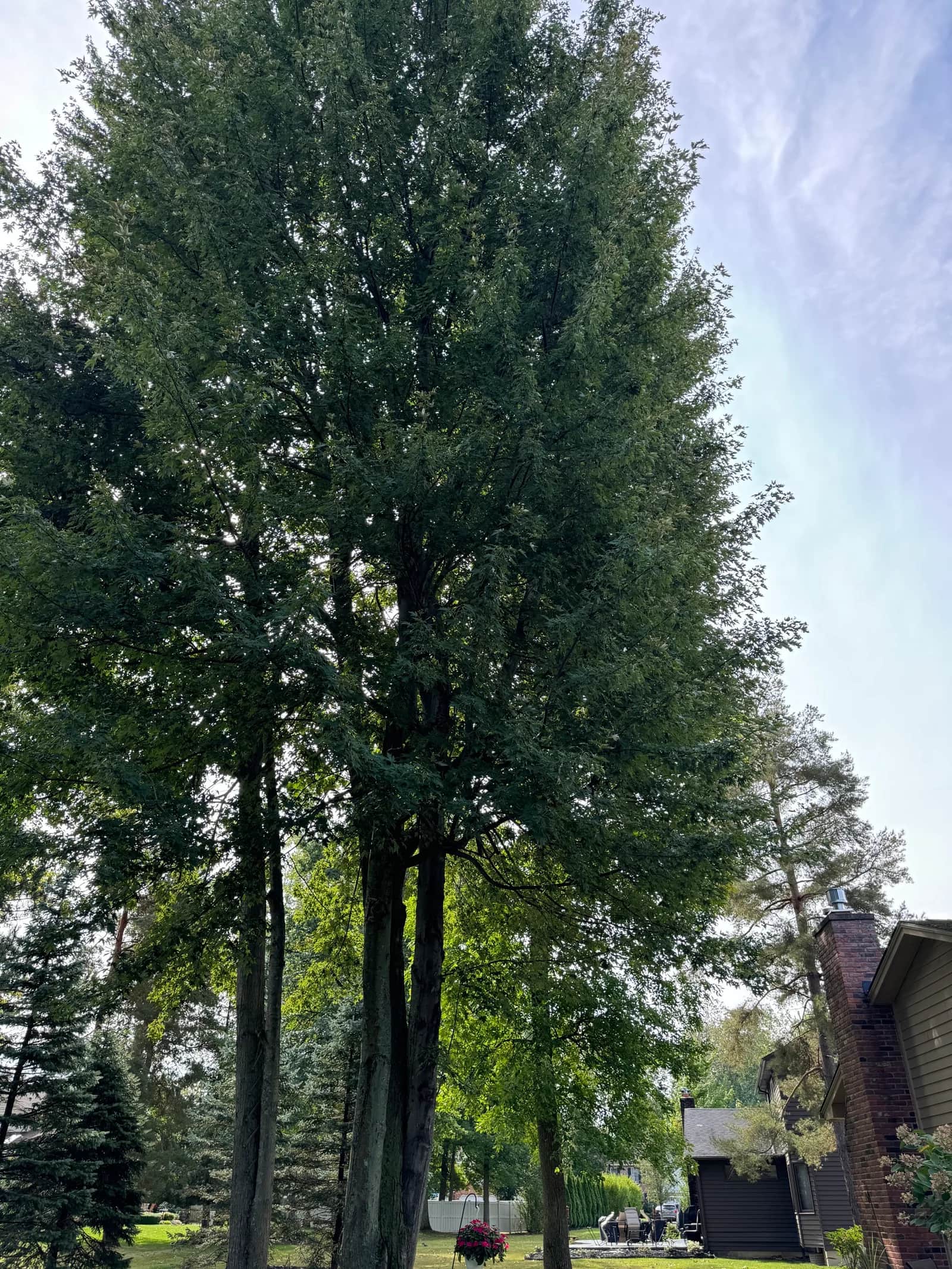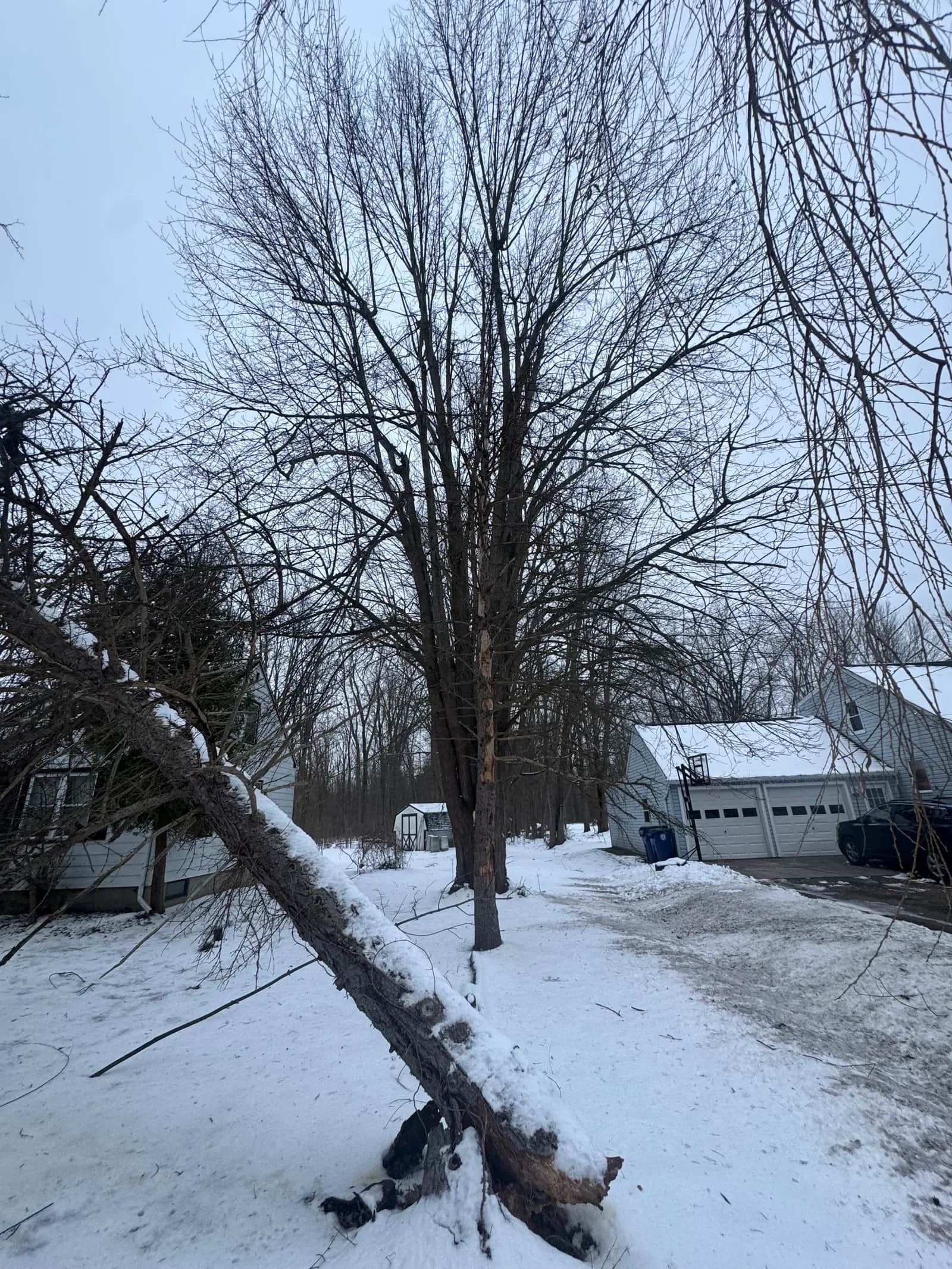
Tree trimming is one of the most common and cost-effective tree services in the Buffalo area. Done regularly, it keeps trees healthy, reduces storm damage risk, and protects your home. But prices vary, and it's not always clear what you're paying for. If you're budgeting for tree trimming in Buffalo, Amherst, Cheektowaga, or surrounding towns, here's exactly what to expect.
What affects tree trimming cost
Unlike removal — where the end result is always the same — trimming cost varies a lot based on how much work the tree actually needs. A crown that hasn't been touched in 20 years is a different job than an annual maintenance trim. Here are the main cost drivers.
Tree height and crown size
Taller trees require either a bucket truck or climbers, both of which add time and cost. A mature oak or silver maple at 60 feet is significantly more expensive to trim than a 20-foot ornamental. Crown width also matters — wide, sprawling crowns take longer to work through than upright, narrow specimens.
Scope of work
Deadwooding (removing dead limbs throughout the crown), clearance pruning (cutting back branches away from a structure or line), and crown reduction (reducing overall size) are progressively more labor-intensive. If a crew is just removing a few specific branches, it costs less than a full structural pruning job.
Access and site conditions
Tight city lots in Buffalo, Tonawanda, or Kenmore where a bucket truck can't reach the crown require climbers — which adds time and increases cost. Soft ground, fences, and proximity to structures also limit equipment options and drive up price.
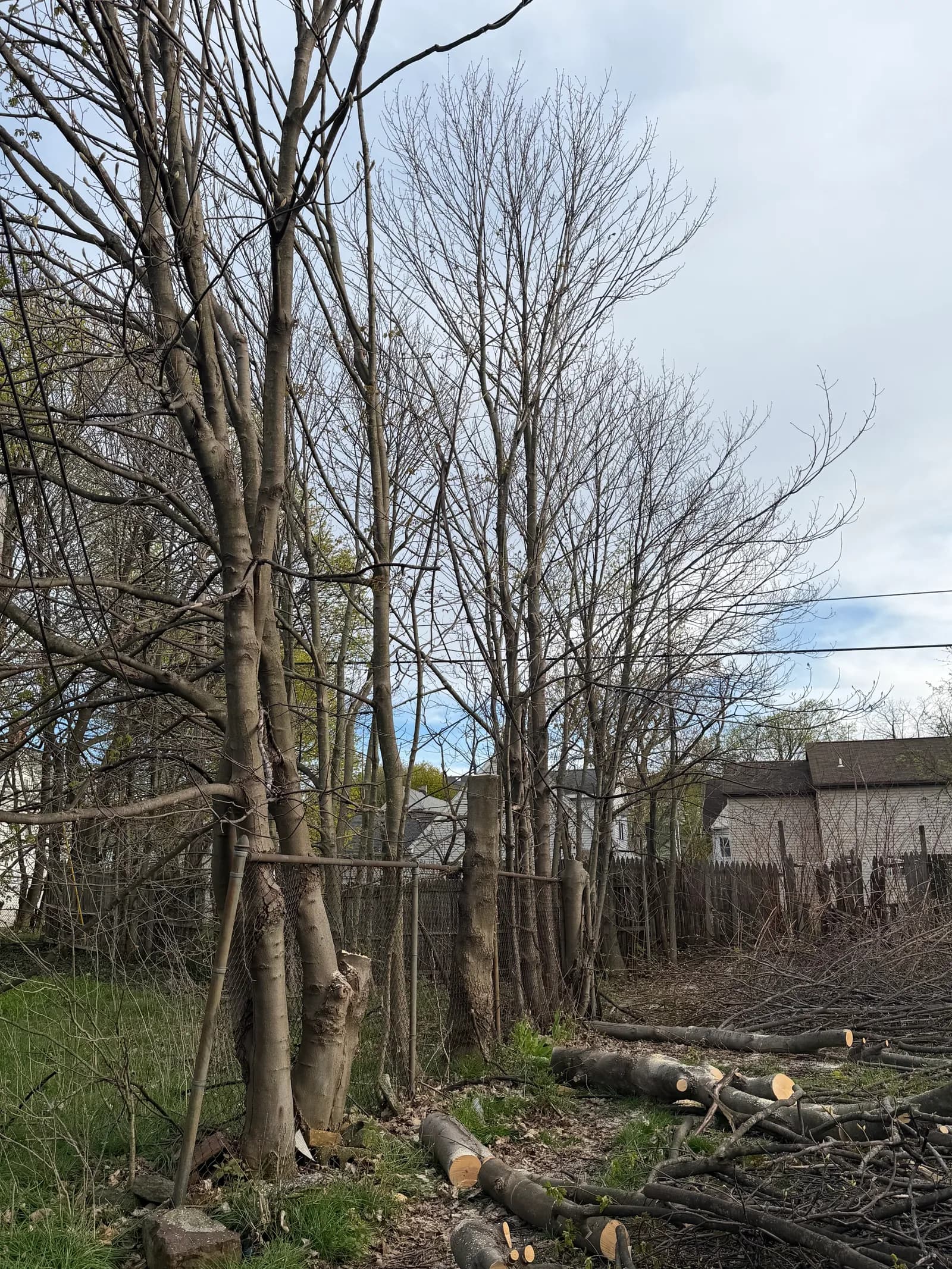
Typical price ranges
- Small trees (under 25 ft): $150–$400
- Medium trees (25–50 ft): $300–$800
- Large trees (50–75 ft): $600–$1,500
- Very large trees (75 ft+): $1,200–$2,500+
- Multi-tree discount: often 15–25% off per additional tree
These are typical Western New York market rates. If you have multiple trees that need work at once, crews often discount the price per tree since they're already on-site with equipment set up.
When trimming is worth the investment
Regular trimming is almost always cheaper than the alternative. A branch that breaks in a February ice storm and hits your roof can easily cost $5,000–$15,000 in structural repairs — far more than the $400 trim that would have prevented it. Trimming also improves tree health, extends the tree's lifespan, and keeps it out of the removal column long-term.
If you're not sure whether a tree needs trimming or full removal, read our guide on tree removal vs tree trimming to help you decide before getting quotes.
Buffalo NY specific factors
Buffalo's lake-effect snow and frequent ice storms make crown management especially important. Heavy snow loads cause branch failures in poorly structured trees — particularly in wide-spreading silver maples, which are everywhere in older Buffalo neighborhoods. If you have a silver maple, Norway maple, or large shade tree that hasn't been pruned in several years, it's worth an assessment before the next winter.
Properties in Amherst, West Seneca, and Hamburg with newer tree plantings should schedule first structural pruning within the first 5–7 years — early trimming shapes the crown, reduces future maintenance costs, and prevents structural defects from developing.
How to compare trimming quotes
- Get 2–3 written quotes specifying exactly what work will be done
- Ask whether debris cleanup and disposal are included
- Confirm the company is licensed and insured in New York
- Ask if they follow ISA pruning standards (no topping)
- Check that the scope matches your actual goal — deadwooding, clearance, or reduction
Buffalo Tree Soldiers provides free trimming estimates across Buffalo, Amherst, Cheektowaga, Tonawanda, and West Seneca. Request yours online or call us and we'll tell you exactly what your tree needs and what it will cost.
Not sure of the right timing? Read our seasonal guide on when to trim trees in Buffalo NY. For pruning standards used by certified professionals, the ISA Best Management Practices are the industry reference for proper technique.