Homeowners searching for a tree topping service in Buffalo NY usually want one thing: a shorter tree, fast. Topping looks decisive — the canopy comes down, the yard feels more open, and the job is done in a day. The problem is what happens next. Topping stresses the tree, invites decay, and triggers a flush of weakly attached sprouts that fail more easily in lake-effect wind and ice. If you are comparing tree topping services near me, this guide explains what topping actually is, why people request it, why it backfires, and what professional tree trimming should look like instead.
What tree topping is
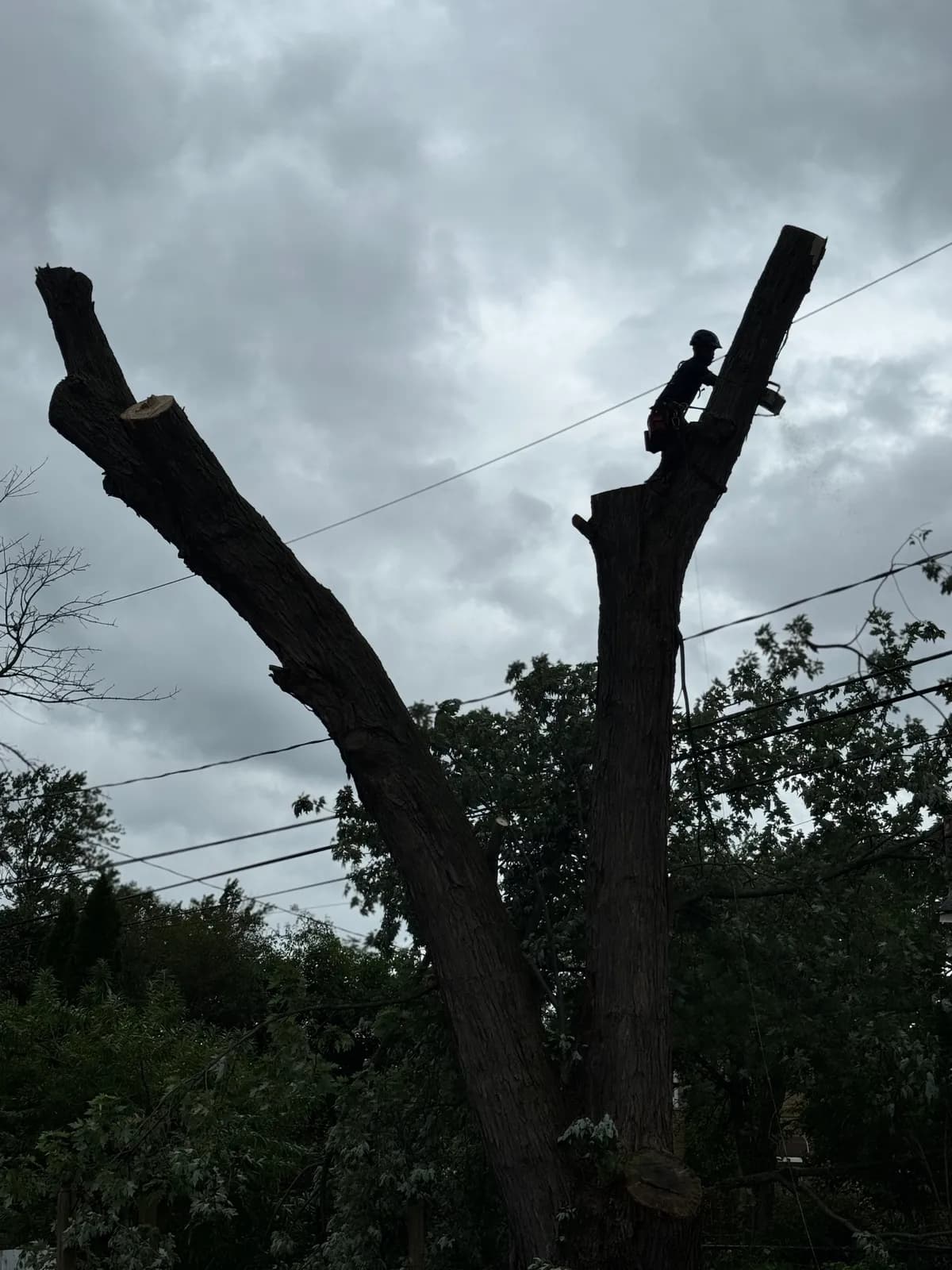
Topping is the indiscriminate cutting of main branches back to stubs — often to a flat "tabletop" or a set height — without reducing to a proper lateral branch that can assume the role of a leader. Large portions of the leafy canopy are removed at once. The result looks neat for a short window and then becomes a mess of sprouts.
That is not pruning. Pruning removes specific limbs for clearance, health, or structure and leaves the tree with a functioning canopy. Topping removes the tree's solar panels and forces emergency regrowth.
Why homeowners request topping
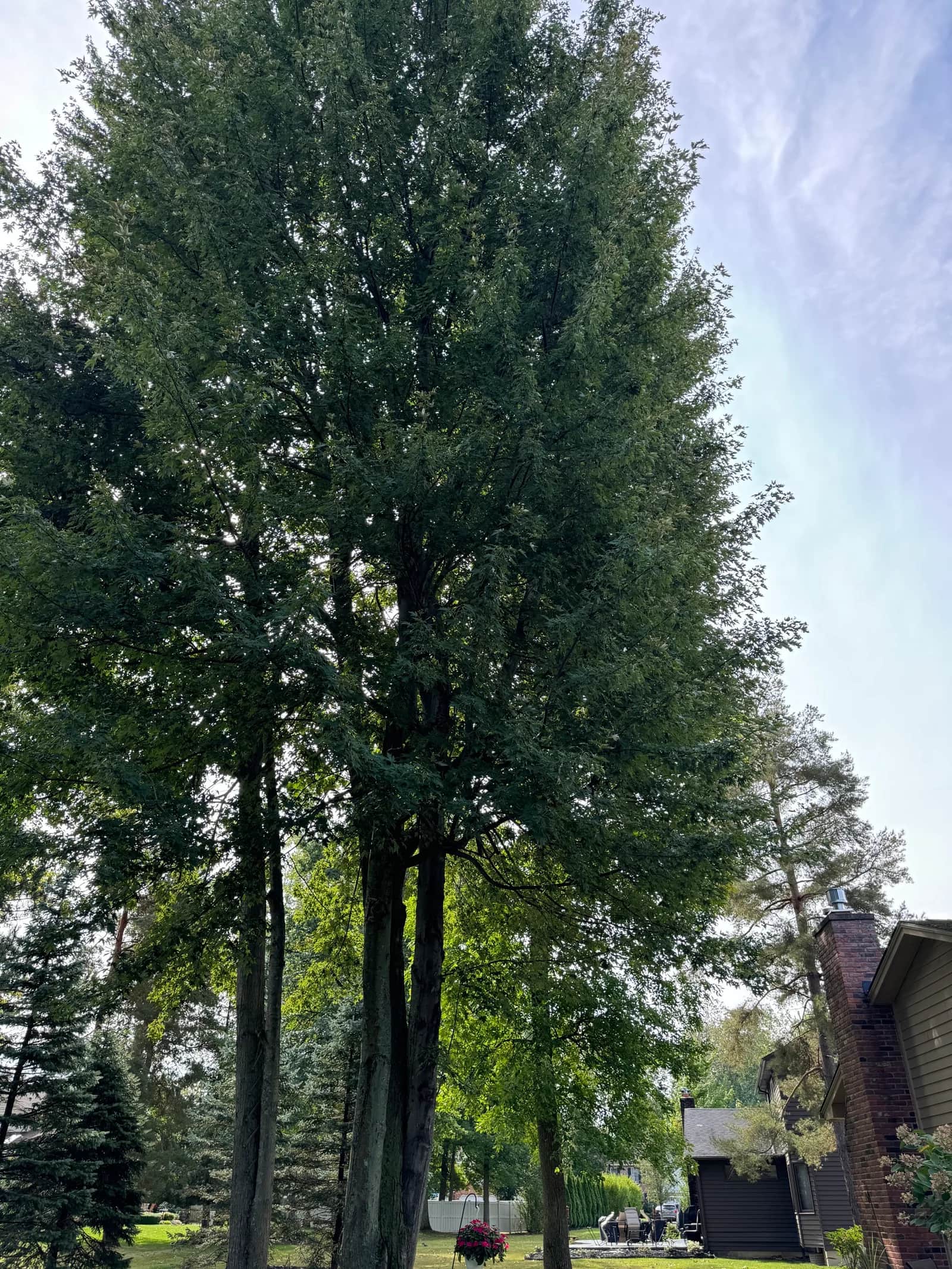
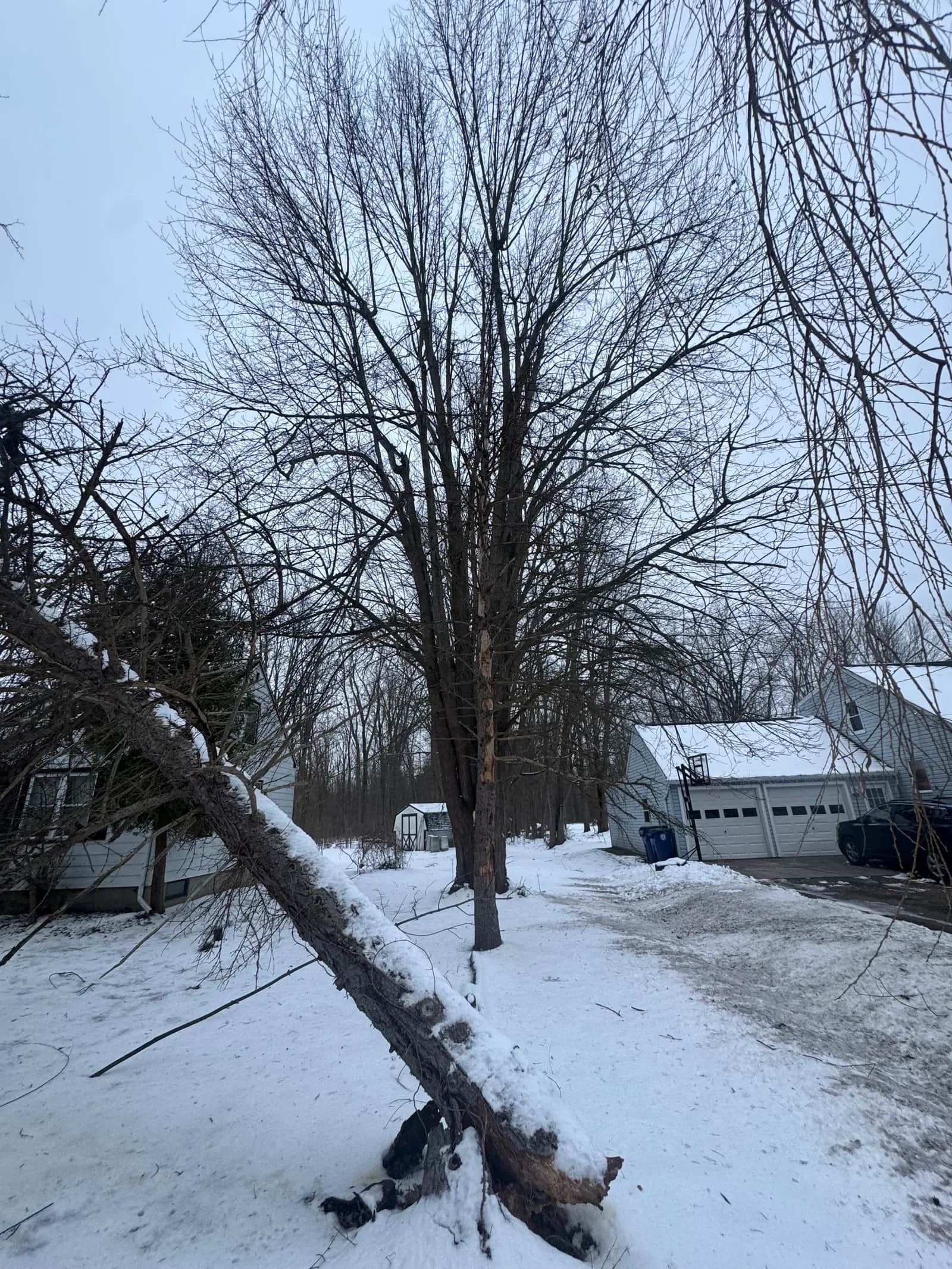
The requests are understandable. A silver maple is shading the whole yard. Branches are close to the roof. Someone is worried about storm failure and wants the tree "cut down to size." On Buffalo lots with mature hardwoods, size and safety concerns are real — they just need the right solution.
- Reduce height for light, views, or roof clearance
- Make a large tree feel safer before winter storms
- Lower the price compared with full removal
- Match what a previous owner or neighbor had done years ago
Wanting a smaller, safer tree is reasonable. Paying for topping to get there usually creates a bigger problem within a few seasons.
Why topping damages trees and increases long-term hazard
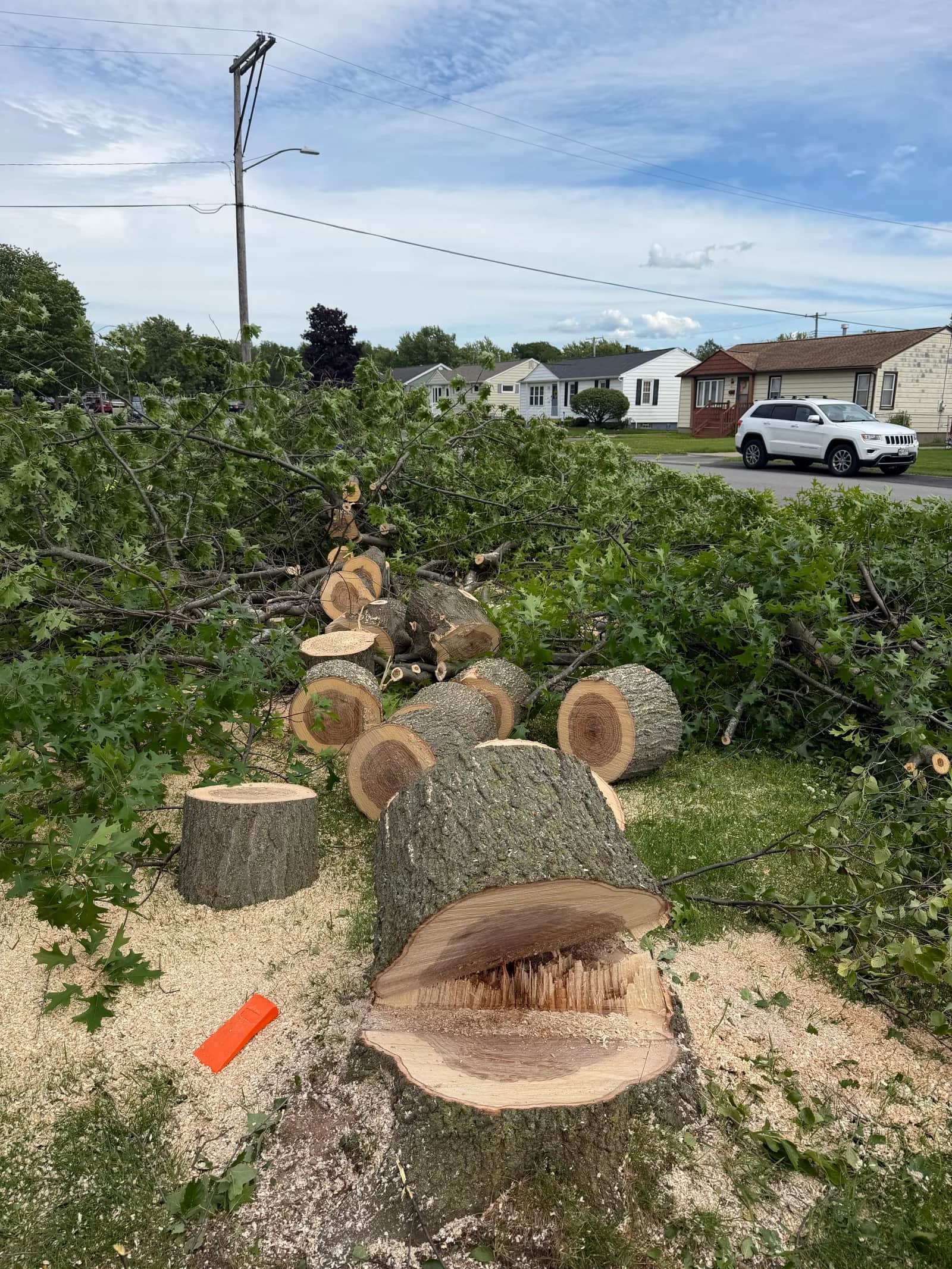
Topping removes a huge share of the tree's energy-producing leaves in one cut. The tree responds by pushing out rapid sprouts from the stubs. Those sprouts grow fast, attach weakly, and are prone to breaking in wind or ice — the opposite of what a homeowner wanted. Large stubs also struggle to seal, which opens pathways for decay. Industry guidance is clear; see ISA's official guidance on why topping hurts trees for the structural and biological reasons.
- Sudden canopy loss stresses the tree and can decline health for years
- Stub cuts invite decay into major limbs
- Weakly attached regrowth raises storm failure risk
- Trees often need repeated costly work after topping — or eventual removal
Tree pruning vs topping: the correct alternative
When size or clearance is the goal, crown reduction and selective thinning are the professional alternatives. Cuts are made back to laterals that can carry the load, keeping living foliage and a natural form. That is real tree pruning vs topping — same homeowner goal, far better outcome. For timing and cost context, see our guides on when to trim trees: a seasonal guide and tree trimming cost in Buffalo.
- Crown reduction: shorten height/spread while preserving structure
- Selective thinning: remove specific limbs for light, clearance, or deadwood
- Clearance pruning: lift or reduce branches near roofs, drives, and lines without stubbing the whole canopy
If you want the work done to industry standards, read why hire a certified arborist — credentials matter most on jobs where the wrong cut permanently changes the tree.
Our approach: proper pruning over topping
Buffalo Tree Soldiers will recommend proper pruning or crown reduction even when a homeowner asks for topping — including on smaller jobs. We would rather explain the better option than sell a quick cut that makes the tree less safe. That is how we build trust: honest recommendations, professional tree trimming methods, and clear pricing for the work that actually helps.
Serving Buffalo, Amherst, Cheektowaga, Tonawanda, West Seneca, and surrounding Western New York communities. If your tree feels too tall or too close to the house, request a free estimate and we will walk the canopy options with you — reduction, thinning, clearance, or removal when that is truly safest — without defaulting to topping.