April 30, 2026 · Buffalo Tree Soldiers
Overhanging Roof Branches Are a Structural Risk, Not Just a Nuisance
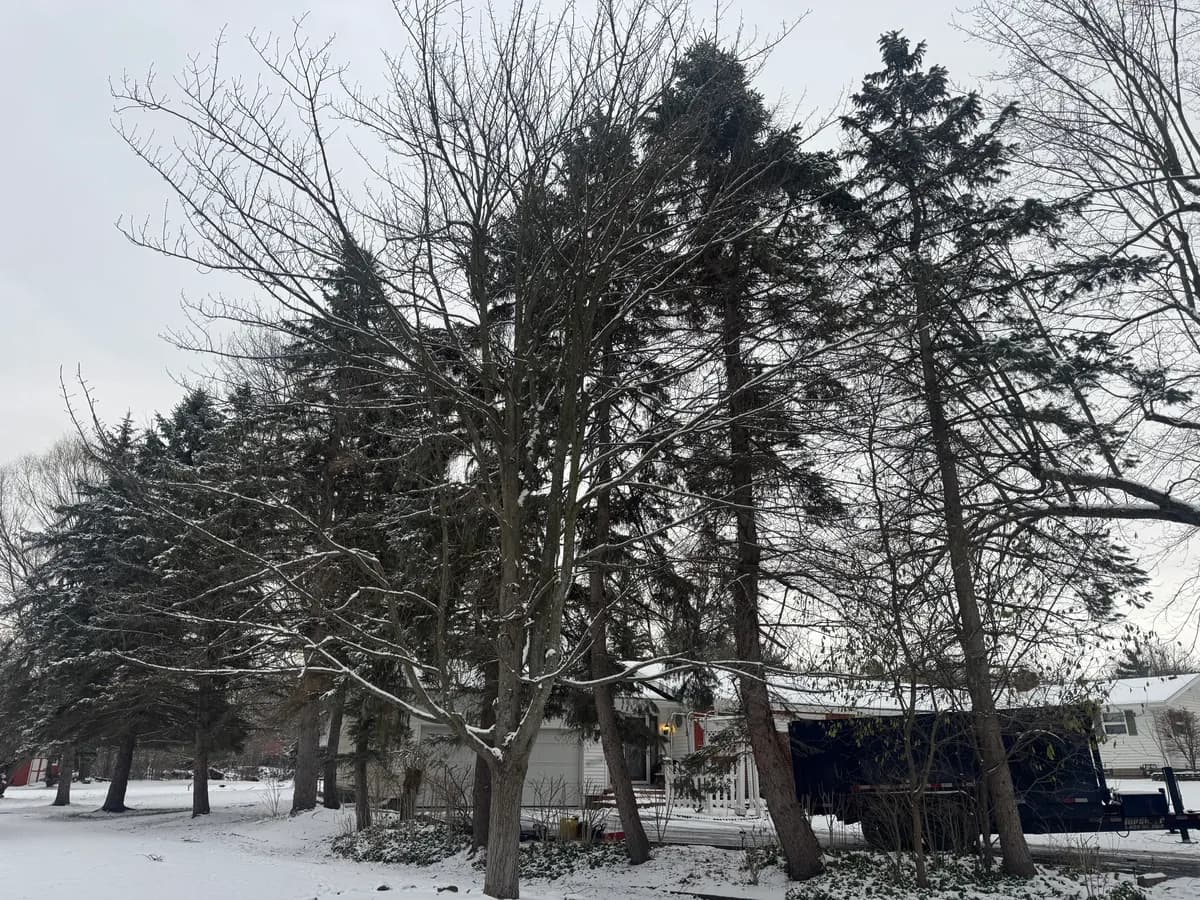
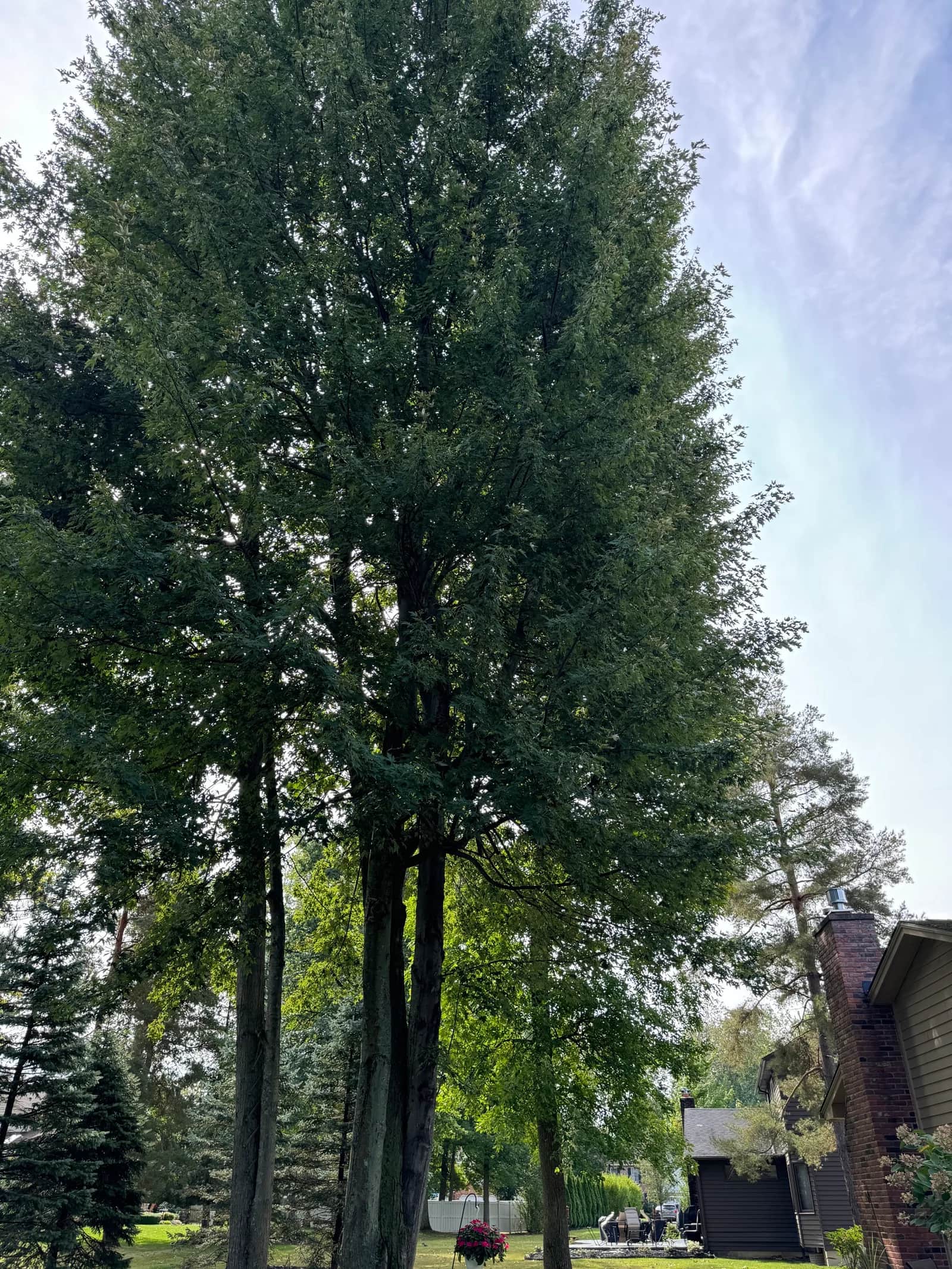
If you are searching tree branch hanging over roof buffalo ny, you are probably seeing branches close enough to touch shingles in wind or snow. This is not only about leaves in gutters. Overhanging limbs increase abrasion damage, moisture retention, debris load, and storm break exposure. In Buffalo winters, branch sag under snow can reduce clearance further and turn a manageable condition into a damage event.
The right fix is not random cutting. You need a structural decision: selective pruning, crown reduction, or full removal depending on branch attachment quality, tree health, and target exposure.
In this article
- Why overhanging branches create roof risk
- How snow and ice change branch behavior
- Trim vs removal decisions for roof-proximity trees
- Buffalo-specific lot and weather factors
- What to request in a roof-clearance estimate
- Frequently asked questions
Why Roof Overhang Matters
Mechanical wear and moisture problems
Branches that scrape roofing surfaces can remove granules, damage flashing, and trap moisture in shaded zones. Over time this can accelerate roof aging.
Debris and drainage obstruction
Repeated twig and leaf drop into gutters causes overflow and edge staining, and can increase ice dam risk if drainage pathways stay blocked.
Impact risk during storms
In tree branch hanging over roof buffalo ny cases, the highest consequence scenario is branch failure during wind or wet snow. Even one failed scaffold can produce expensive repair scope.
Snow Load and Winter Sag in Buffalo
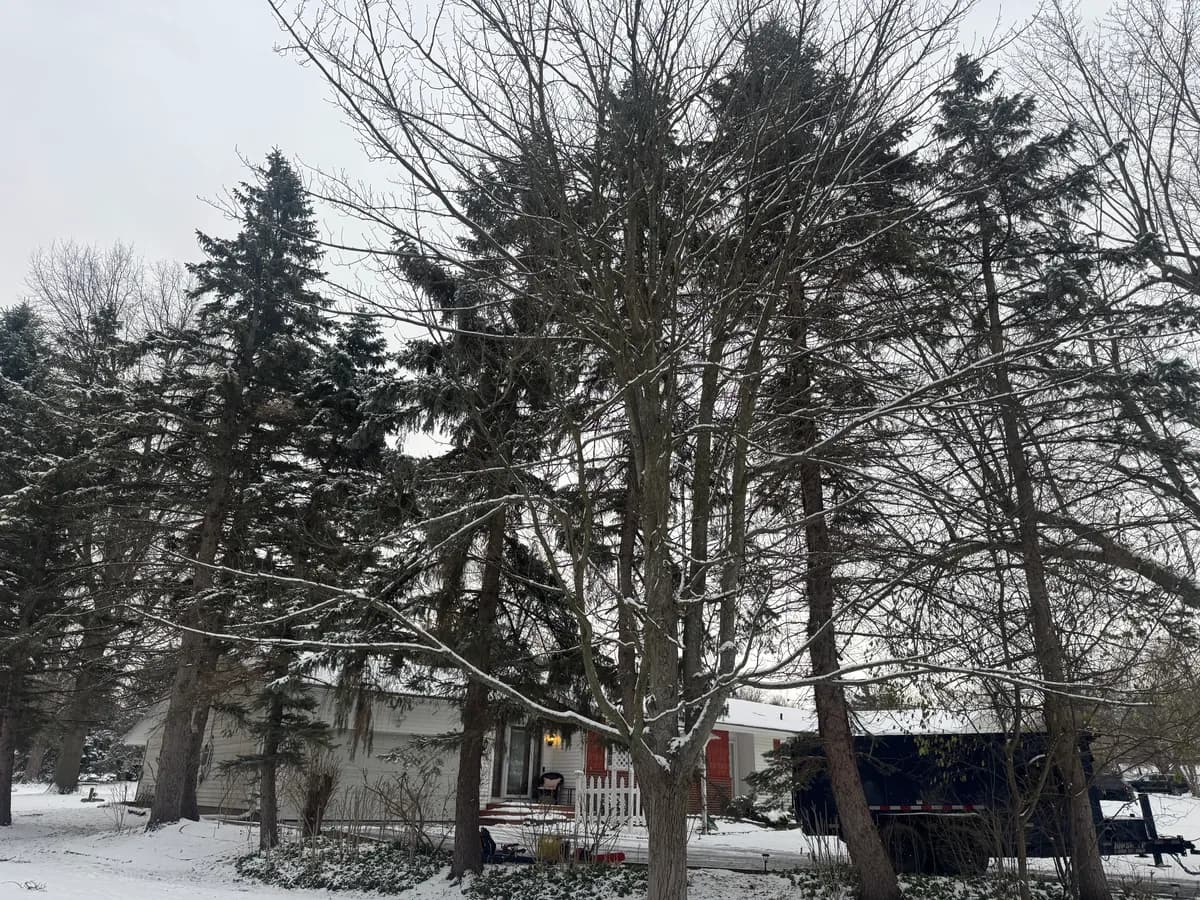
Wet snow can add significant weight to already extended limbs. Ice buildup shifts leverage and can trigger union splitting. Trees that clear the roof in summer can contact it under winter load.
If active cracking, hanging limbs, or line interference is present, prioritize24/7 emergency tree responsebefore routine scheduling.
Trim vs Remove for Overhanging Risk
When trimming is usually enough
If trunk and roots are stable and defects are localized,targeted tree trimming optionscan restore safe roof clearance and reduce load concentration.
When removal is the safer path
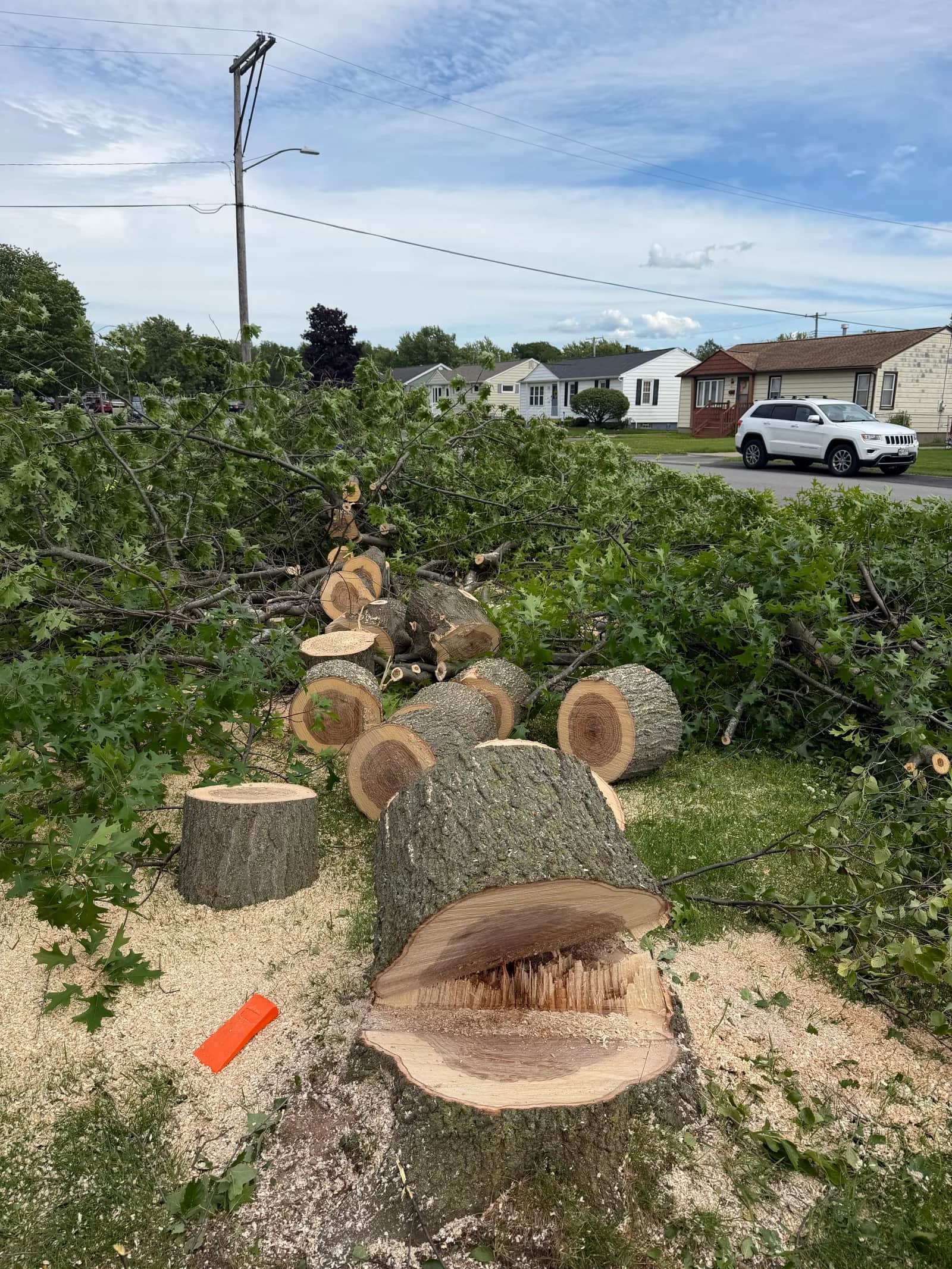
If overhang is part of broader decline—trunk decay, major deadwood, root instability—professional tree removal in Buffalooften provides safer long-term control than repeated emergency pruning.
If post-removal grading or yard usability matters, includecomplete stump grinding support.
Buffalo Access and Neighborhood Constraints
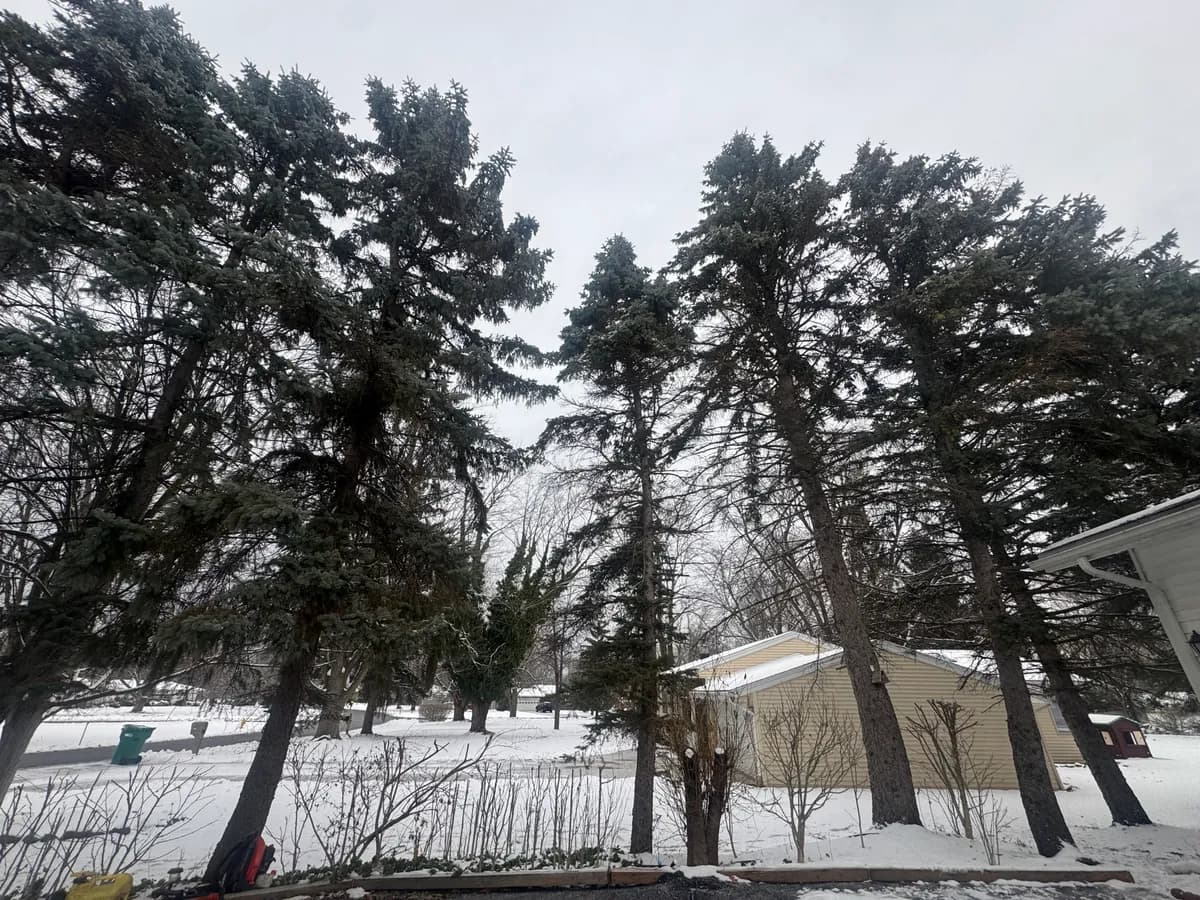
Older city lots often have tighter side access, shared boundaries, and utility conflicts that change method and cost. In these settings, controlled rigging and protection planning are more important than speed.
For local code and policy context, useCity of Buffalo tree regulations. For pruning/removal standards, reviewISA arborist guidanceandUSDA Urban Forestry resources.
What a Good Roof-Clearance Estimate Includes
- current and target clearance ranges
- branch union quality and defect notes
- protection steps for roof and hardscape
- cleanup, disposal, and timeline details
- follow-up maintenance recommendations
For broader planning on multi-tree properties,full-service local tree carecan stage work by hazard priority. Confirm local support zones viaareas we serve across Western New York.
Homeowner checklist before work
- Photograph branch position relative to roofline.
- Move vehicles and patio items from drop zones.
- Avoid DIY elevated cuts near structures.
- Require written scope and insurance documentation.
- Recheck branch clearance after major snow events.
- Keep communication records with contractor and insurer if damage exists.
Conclusion
When tree branch hanging over roof buffalo ny becomes visible, early correction is usually cheaper than storm repairs. The safest solution depends on structural condition, not guesswork. A documented assessment now gives you clear options and reduces both property risk and emergency costs.
Frequently Asked Questions
How much clearance should branches have above a roof?
Clearance needs vary by species, branch architecture, and expected winter load, but enough separation should exist to prevent contact during normal sway and snow sag.
Can I remove only the one branch over the roof?
Sometimes yes, but only if that cut does not destabilize canopy structure. A proper inspection should confirm whether isolated pruning is structurally acceptable.
Should I wait until spring if branches are close but not touching?
If severe weather is approaching, waiting can increase risk. In Buffalo, pre-winter or active-season corrective pruning is often safer than post-storm emergency work.
Buffalo field scenario 1
A realistic local example of roofline overhang branch risk helps explain why timing decisions matter. In this scenario, homeowners dealing with tree branch hanging over roof buffalo ny noticed gradual change after two weather cycles, then sharper progression after one high-wind event. The key lesson is that visible trend matters more than one-time appearance. By documenting condition, comparing two itemized scopes, and prioritizing life-safety targets first, the final plan reduced both risk and total disruption. For Buffalo-area lots, this method avoids reactive emergency decisions and keeps work aligned with access, cleanup, and long-term property use.
Another practical takeaway is communication. Owners who discuss drop zones, site protection, and cleanup details before work begins usually avoid most post-job disputes. When the team explains why trim, removal, or monitoring is recommended, homeowners can make confident decisions under pressure. This is especially important when tree branch hanging over roof buffalo ny involves structures, driveways, sidewalks, or neighboring boundaries where consequences are higher.
From a budgeting standpoint, staged planning is often better than deferral. Addressing highest-risk components first, then scheduling lower-priority corrections, usually costs less than emergency response after avoidable failure. In Buffalo conditions, that strategy is a reliable way to manage roofline overhang branch risk while preserving safety and property function.
Buffalo field scenario 2
A realistic local example of roofline overhang branch risk helps explain why timing decisions matter. In this scenario, homeowners dealing with tree branch hanging over roof buffalo ny noticed gradual change after two weather cycles, then sharper progression after one high-wind event. The key lesson is that visible trend matters more than one-time appearance. By documenting condition, comparing two itemized scopes, and prioritizing life-safety targets first, the final plan reduced both risk and total disruption. For Buffalo-area lots, this method avoids reactive emergency decisions and keeps work aligned with access, cleanup, and long-term property use.
Another practical takeaway is communication. Owners who discuss drop zones, site protection, and cleanup details before work begins usually avoid most post-job disputes. When the team explains why trim, removal, or monitoring is recommended, homeowners can make confident decisions under pressure. This is especially important when tree branch hanging over roof buffalo ny involves structures, driveways, sidewalks, or neighboring boundaries where consequences are higher.
From a budgeting standpoint, staged planning is often better than deferral. Addressing highest-risk components first, then scheduling lower-priority corrections, usually costs less than emergency response after avoidable failure. In Buffalo conditions, that strategy is a reliable way to manage roofline overhang branch risk while preserving safety and property function.
Buffalo field scenario 3
A realistic local example of roofline overhang branch risk helps explain why timing decisions matter. In this scenario, homeowners dealing with tree branch hanging over roof buffalo ny noticed gradual change after two weather cycles, then sharper progression after one high-wind event. The key lesson is that visible trend matters more than one-time appearance. By documenting condition, comparing two itemized scopes, and prioritizing life-safety targets first, the final plan reduced both risk and total disruption. For Buffalo-area lots, this method avoids reactive emergency decisions and keeps work aligned with access, cleanup, and long-term property use.
Another practical takeaway is communication. Owners who discuss drop zones, site protection, and cleanup details before work begins usually avoid most post-job disputes. When the team explains why trim, removal, or monitoring is recommended, homeowners can make confident decisions under pressure. This is especially important when tree branch hanging over roof buffalo ny involves structures, driveways, sidewalks, or neighboring boundaries where consequences are higher.
From a budgeting standpoint, staged planning is often better than deferral. Addressing highest-risk components first, then scheduling lower-priority corrections, usually costs less than emergency response after avoidable failure. In Buffalo conditions, that strategy is a reliable way to manage roofline overhang branch risk while preserving safety and property function.
For homeowners evaluating tree branch hanging over roof buffalo ny, documented trend analysis and early intervention usually produce safer outcomes than delayed, weather-driven decisions.