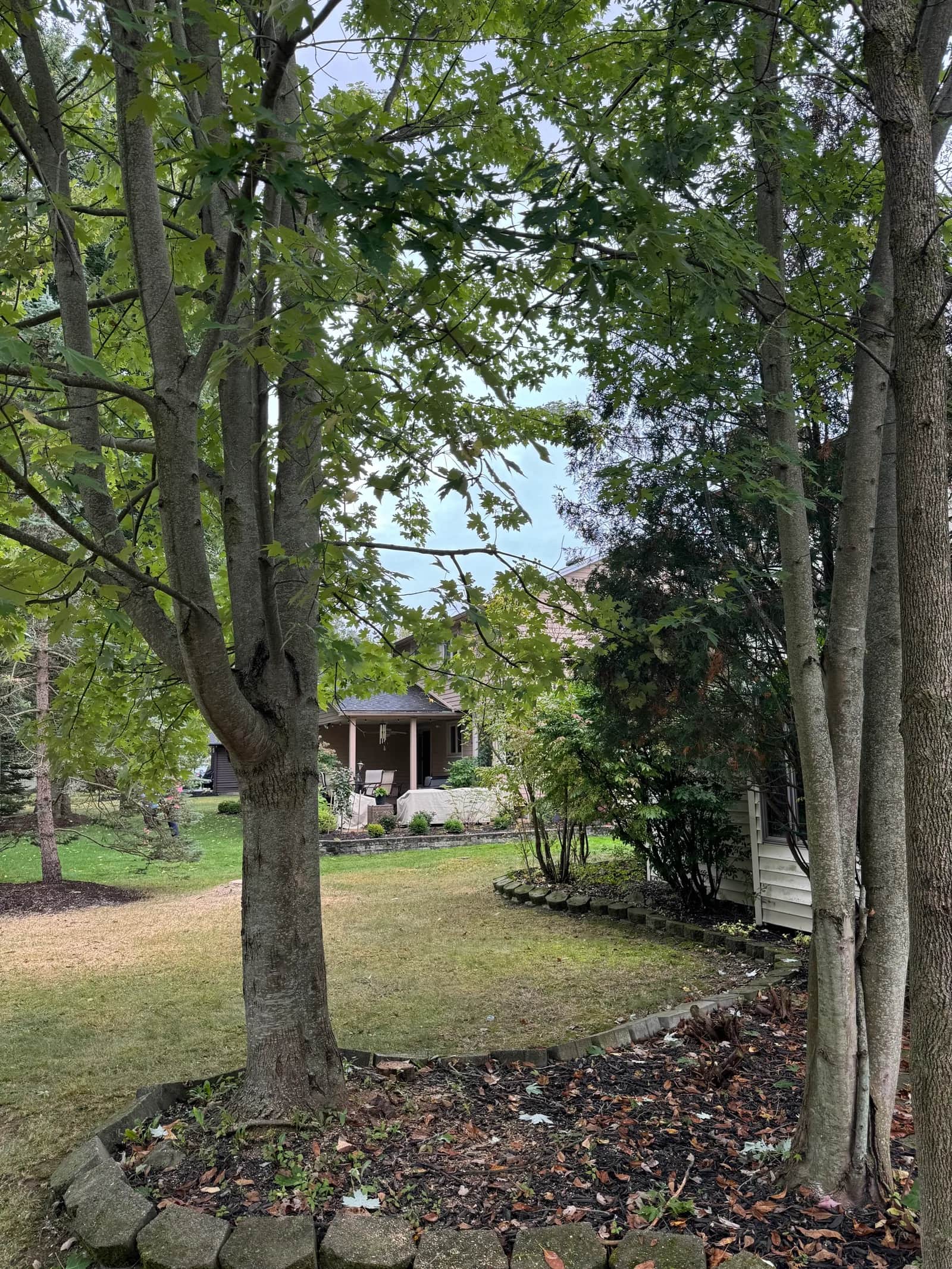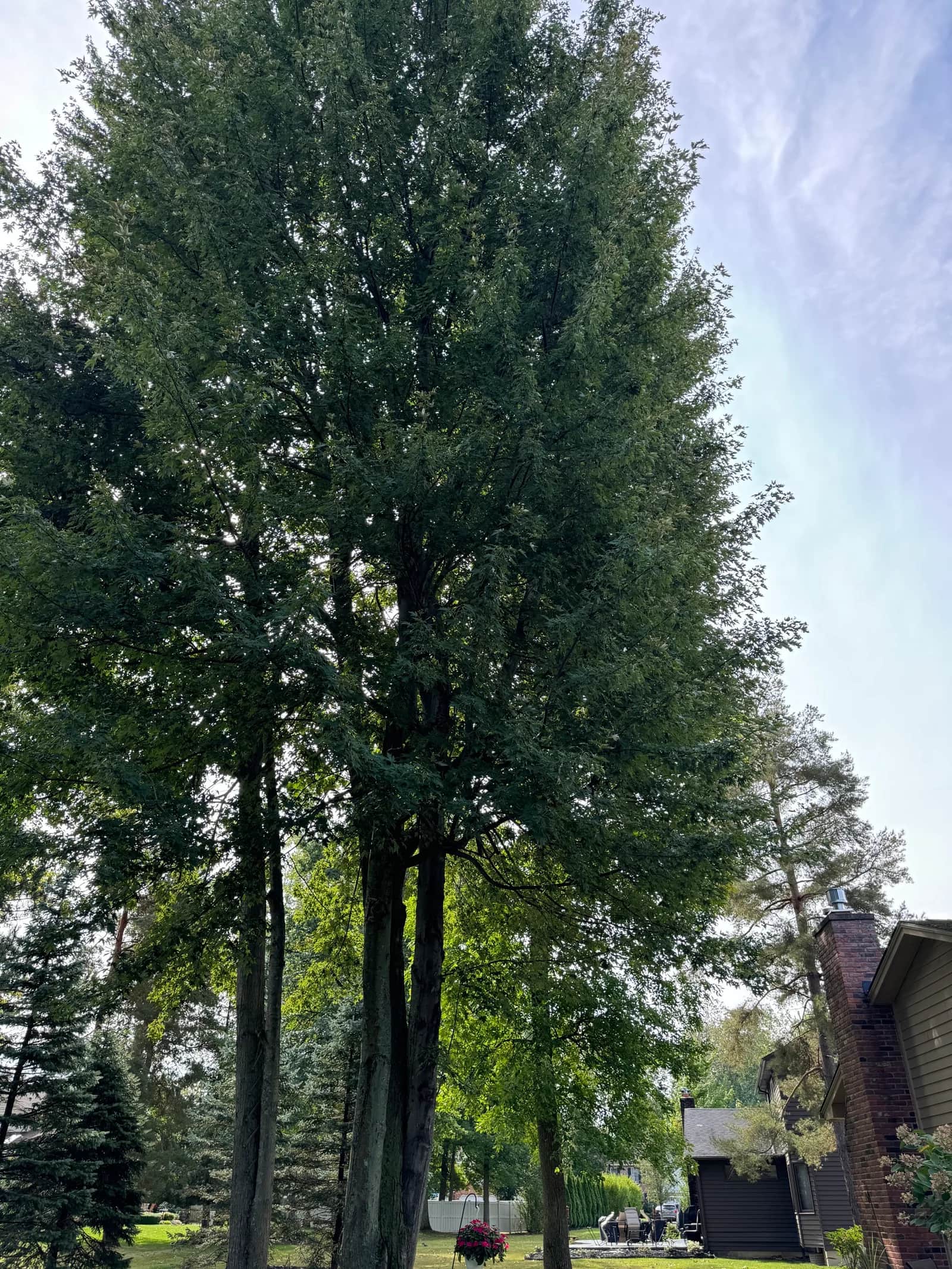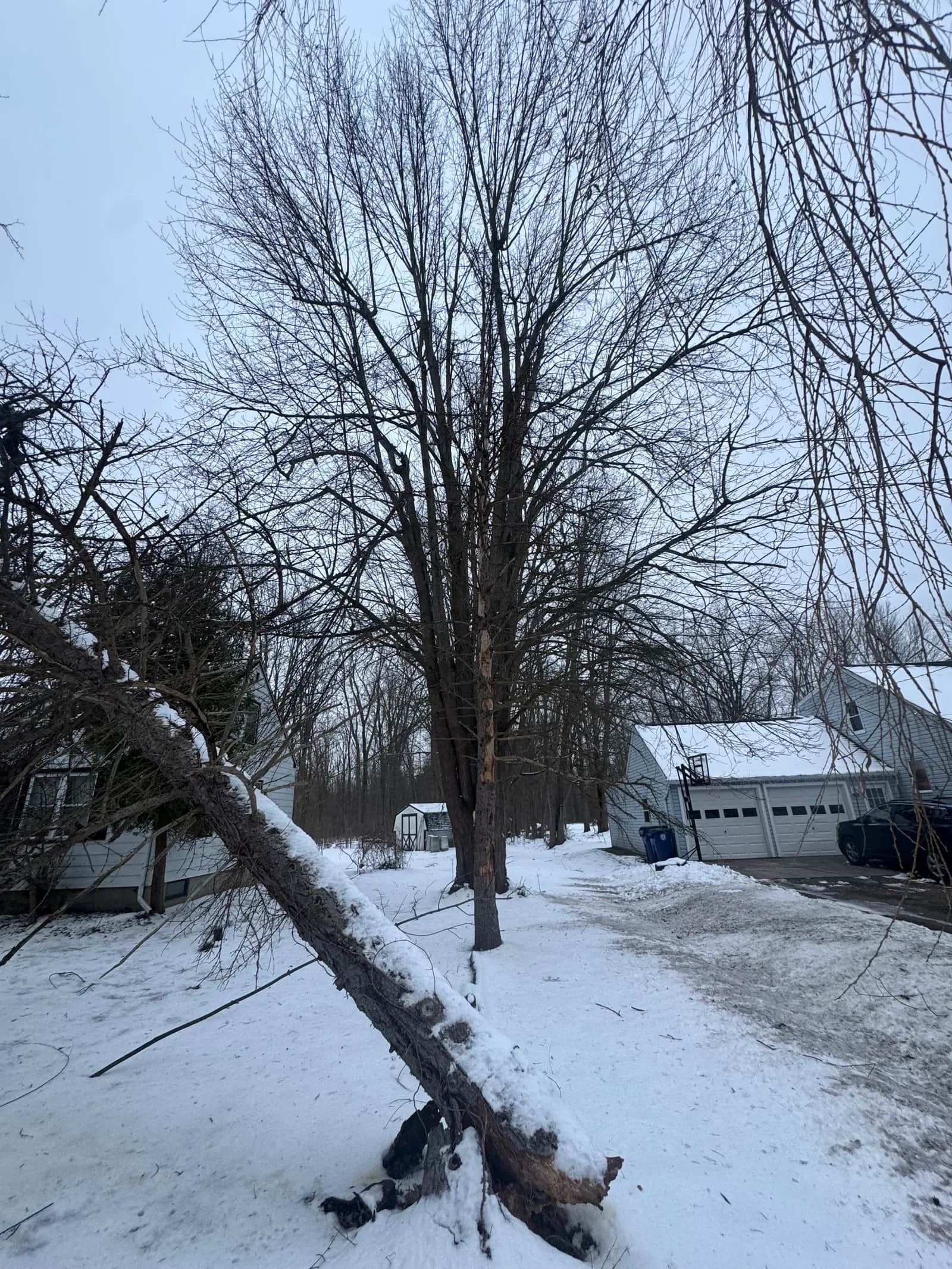
Buffalo's climate — with its heavy lake-effect snow, extended freeze-thaw cycles, and relatively short growing season — creates specific timing considerations for tree trimming that differ from warmer regions. The right window depends on what you're trying to accomplish, the species you're dealing with, and whether there's a safety issue involved. This guide breaks it all down.
Late winter (February–April): the primary window
This is the gold standard for tree pruning in Buffalo and Western New York. Trees are fully dormant, which means pruning wounds don't bleed excessively, there's minimal risk of disease entry, and the tree can direct its first spring energy surge directly into healing and new growth. The lack of leaves allows arborists and crews to see the full branch architecture clearly, making structural decisions more accurate.
In Buffalo's climate, late February through mid-April is typically the ideal window before buds begin to swell noticeably. Some years with a mild winter, that window can shift earlier — and some years with a late cold snap, it extends further into April. The goal is to prune after the coldest weather has passed but before the first flush of spring growth.
Spring (May–June): acceptable for light work
Once leaves emerge, full-scale structural pruning is less ideal. That said, clearance pruning (removing branches near a structure or overhead line) and removing isolated dead limbs is still acceptable in spring. The tree is actively growing and has the energy to respond to pruning wounds. Avoid heavy work that removes more than 20% of the living crown during this period.
Summer (July–August): avoid heavy pruning
By midsummer, trees are in full growth mode and storing energy for the following season. Heavy pruning during this period stresses the tree and can trigger excessive regrowth of weak water sprouts. For safety trimming, removing obviously dead wood, or light clearance work, summer trimming is acceptable. But avoid removing large, live branches unless there's a specific safety reason.
Fall (September–November): limited work only
Early fall is one of the poorer times to prune trees in Buffalo. The tree is preparing for dormancy but hasn't fully entered it, meaning wounds heal slowly and energy that should be stored for winter gets diverted to wound response. Late fall after the first hard frost — when the tree has fully dropped its leaves and entered dormancy — is significantly better. At that point, late fall and early winter are essentially equivalent to early spring for pruning purposes.
Anytime: hazardous and dead branches
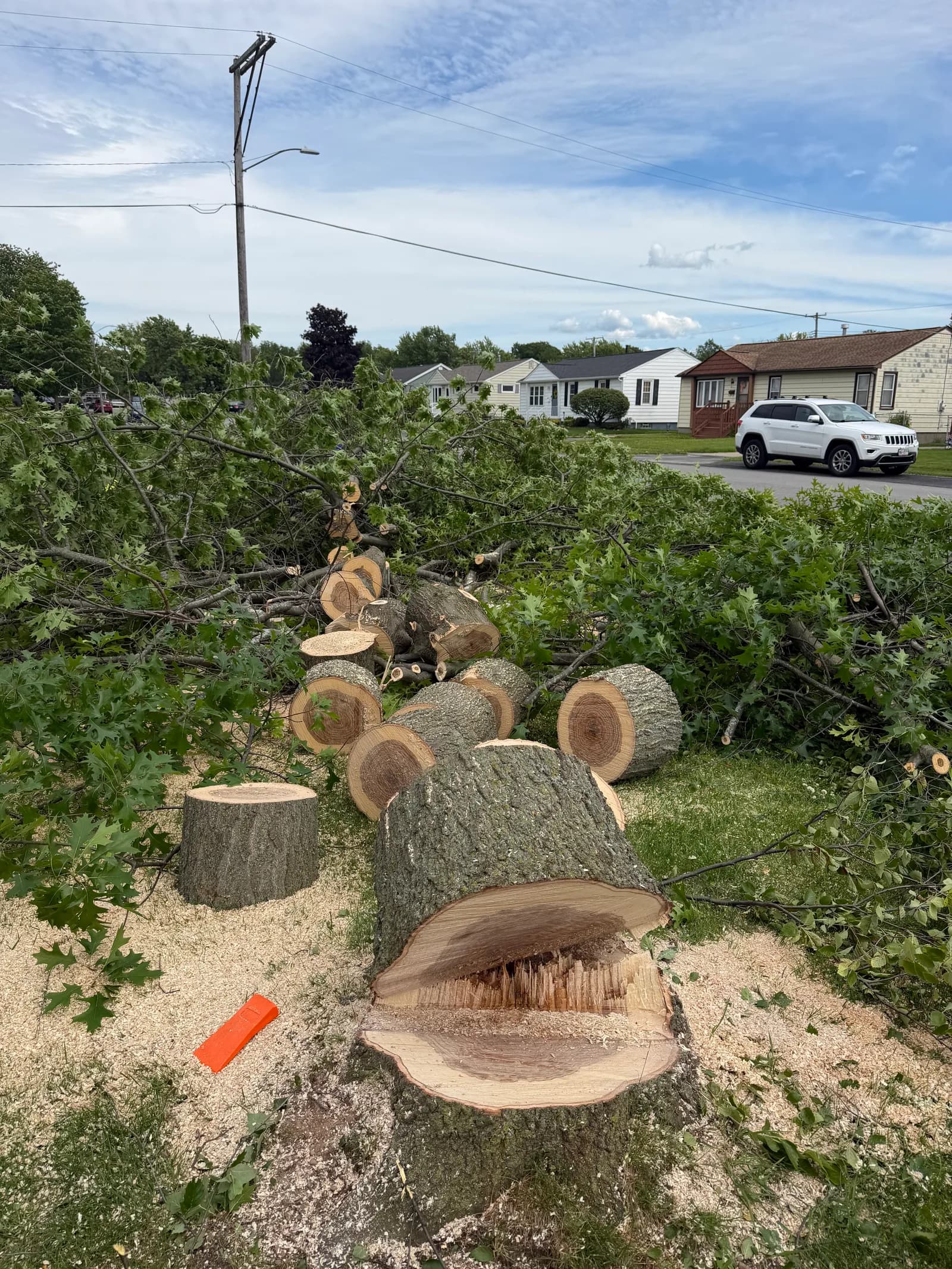
Regardless of season, dead branches, hanging limbs, broken wood, and anything leaning toward a structure should be addressed immediately. Safety always overrides ideal timing. If you're dealing with storm-damaged trees in Buffalo, emergency tree service is available any time of year.
Species-specific timing rules for Buffalo
- Oaks: prune only November–March to reduce oak wilt risk
- Elms: avoid pruning April–August (Dutch elm disease vector is active)
- Silver maple: late winter best; prone to bleeding but heals well
- Fruit trees: late winter just before bud break for best fruiting response
- Ash trees: any dormant season (but assess EAB status first — many should be removed)
- Evergreens: late winter or early summer (after new growth hardens off)
Ready to schedule trimming in Buffalo, Amherst, Cheektowaga, Tonawanda, or West Seneca? Request a free estimate and we'll assess your trees and schedule work at the right time for your species and situation.
Before you book, check our guide on tree trimming costs in Buffalo NY so you know what to budget. If you're also deciding which company to hire, read how to choose a tree service in Buffalo. For species-specific pruning guidance, the ISA's pruning standards are the professional reference for Western New York arborists.