Tree removal in Buffalo and Western New York is not a one-size-fits-all cost. Prices range from a few hundred dollars for a small ornamental tree to well over $4,000 for a large, hazardous hardwood close to a structure. If you are budgeting for tree removal in the Buffalo area, this guide breaks down exactly what drives the price — so you know what to expect before the crew arrives.
Key factors that affect tree removal cost
No two tree removals are alike. Crews have to assess each job individually because small differences in location, condition, and access can dramatically change the labor and equipment needed. Here are the most important variables.
Tree size and trunk diameter
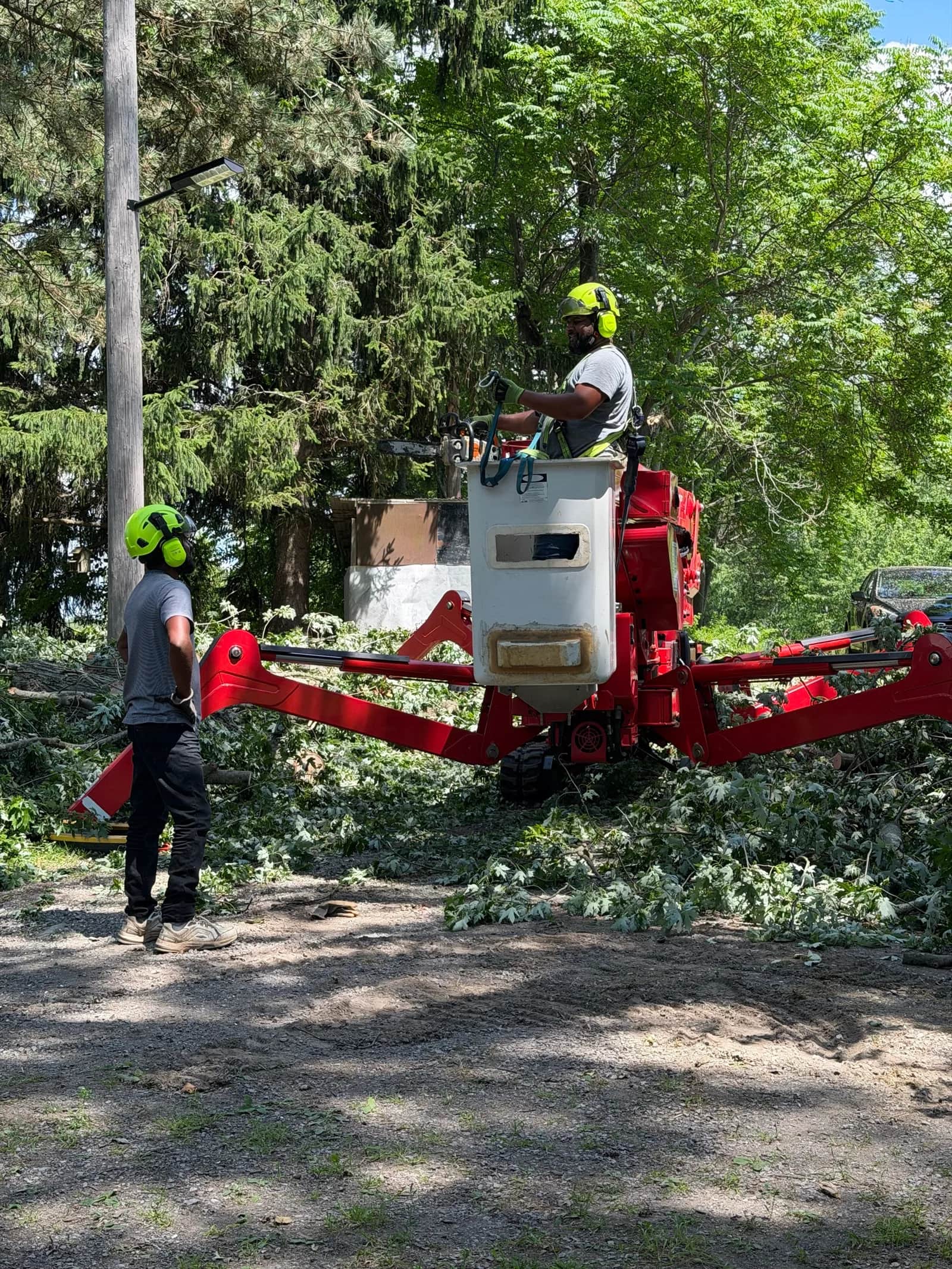
Height and trunk girth are the single biggest cost drivers. A 15-foot ornamental pear is a quick job with a chainsaw and a pickup truck. A 70-foot silver maple near a garage requires an aerial lift, skilled rigging, and a full crew for several hours. Every additional foot of height and inch of trunk adds labor time and equipment complexity.
Location and access
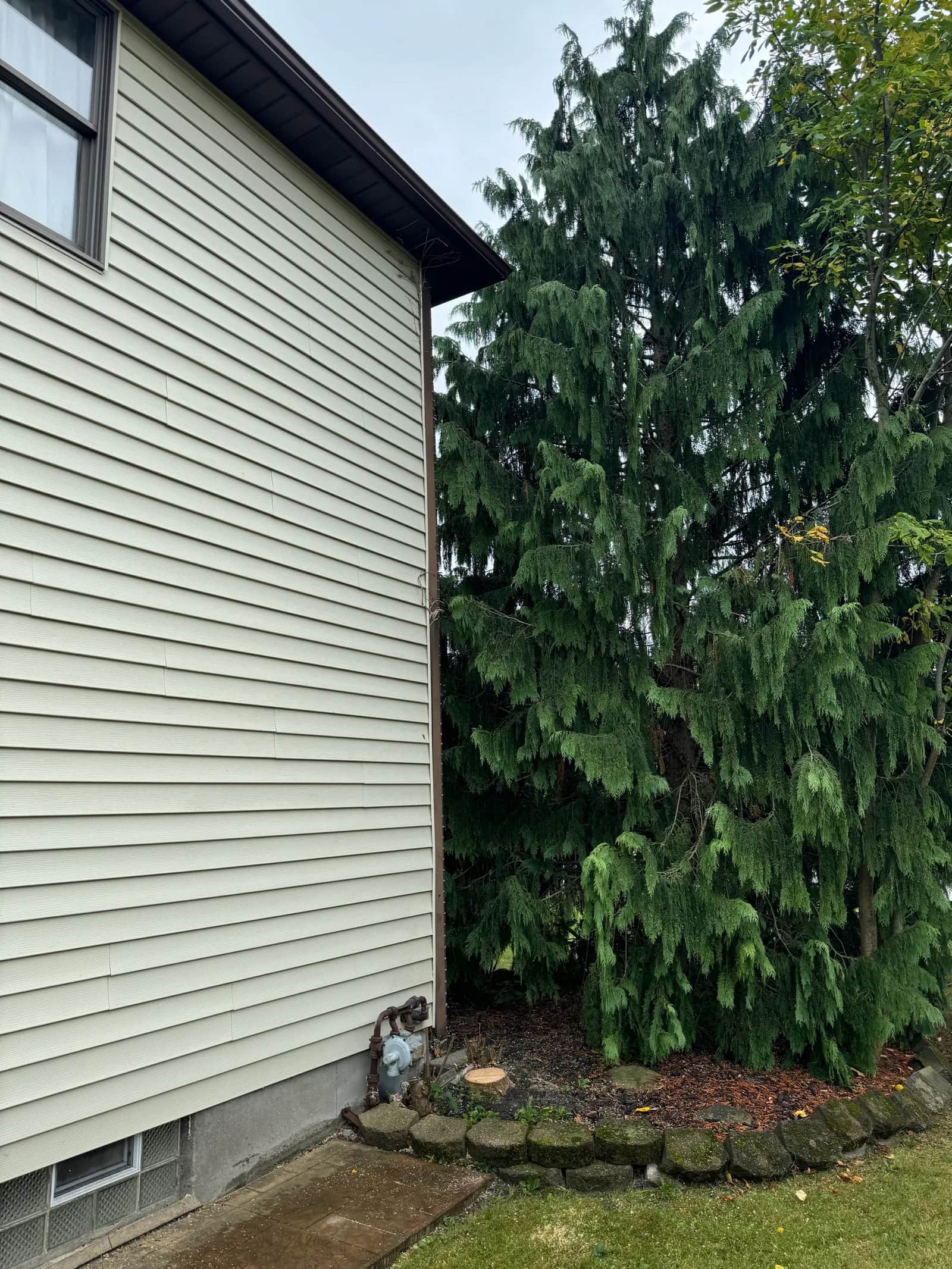
A tree in an open backyard with easy equipment access costs far less to remove than the same tree wedged between a house and a fence in a Buffalo East Side neighborhood. Tight alleys, overhead utility lines, neighboring structures, and soft ground all add complexity. In older Buffalo city lots where access is restricted, expect to pay a premium for hand-rigging work that can't be done with a bucket truck.
Tree condition
Dead or heavily diseased trees are often more dangerous to remove than healthy ones because their structural integrity is unpredictable. Hollow sections, rot, and dead wood require more care and sometimes specialized rigging. Storm-damaged trees with hanging limbs or split trunks also take longer and carry more risk for the crew, which is reflected in the price.
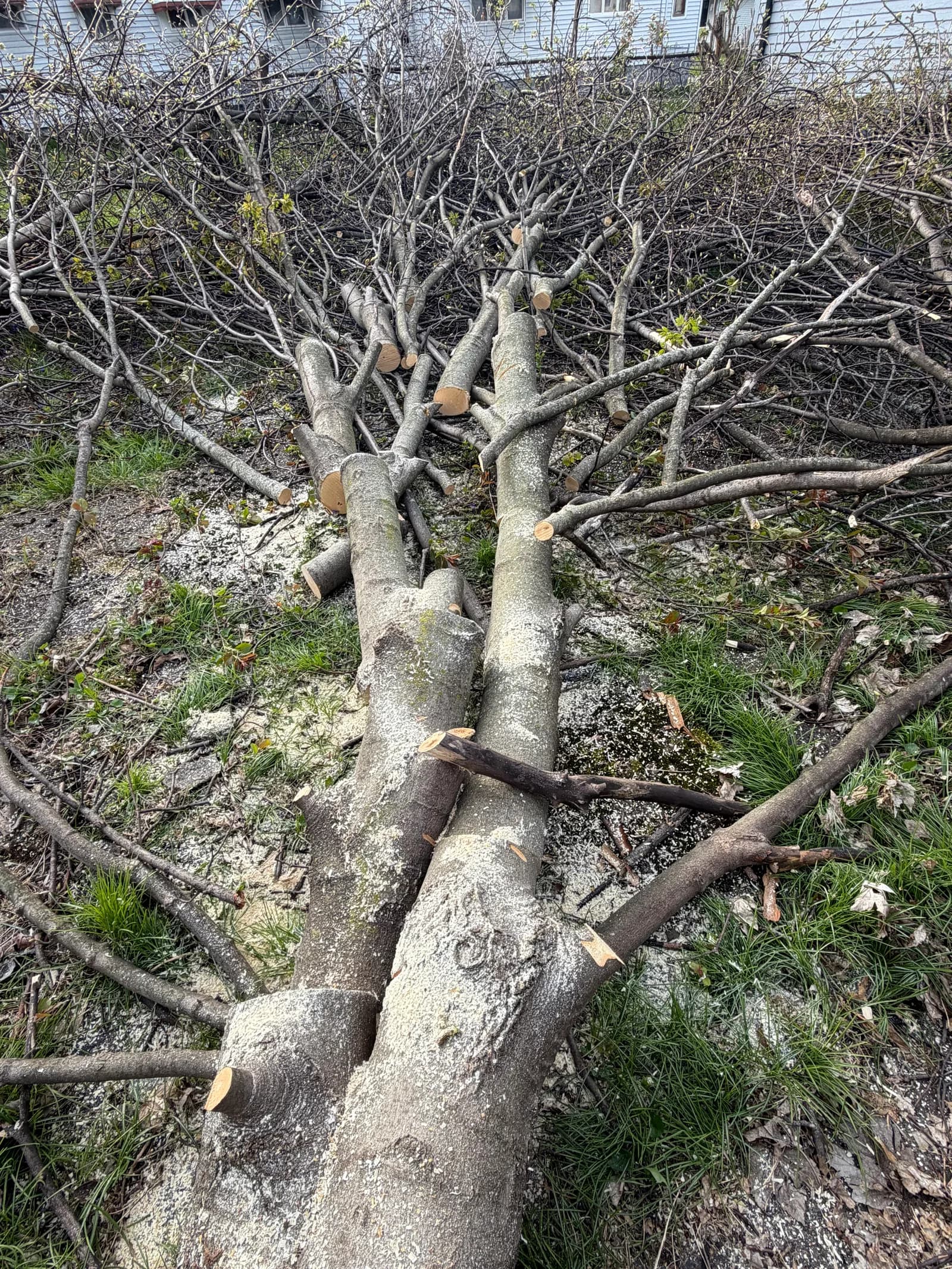
Typical price ranges by tree size
- Small trees (under 25 ft): $200–$500
- Medium trees (25–50 ft): $500–$1,500
- Large trees (50–75 ft): $1,500–$3,000
- Very large or hazardous trees (75 ft+): $3,000–$5,000+
- Emergency or after-hours removals: add $500–$1,500 to base price
These ranges reflect typical Western New York market rates as of 2026. Urban properties in Buffalo, Amherst, and Cheektowaga with tight access often sit toward the top of each range, while open suburban lots in West Seneca or Tonawanda tend toward the middle.
What's usually included — and what's not
Most professional tree removal quotes include cutting the tree down, sectioning the wood, and removing it from the property. What's often quoted separately or not included at all: stump grinding, haul-away of larger log sections if you want firewood, and grinding or removal of the root ball. Always ask for a written, itemized quote so there are no surprises when the crew finishes.
- Cutting and removing the tree: usually included
- Debris and brush removal: usually included
- Stump grinding: often a separate charge of $150–$400
- Log splitting or firewood prep: usually not included
- Root ball removal: add-on charge
Buffalo NY specific considerations
Properties across Buffalo and surrounding towns like Amherst, Tonawanda, and Cheektowaga commonly have large, aging hardwoods — silver maples, Norway maples, oaks, and ash trees — that were planted 50 to 80 years ago. These species grow large and often require the same equipment and skill level as a commercial job. If you have an aging silver maple or an ash tree showing signs of emerald ash borer damage, read our guide on signs a tree needs to be removed before getting quotes so you know what you are dealing with.
Buffalo's older neighborhoods — Elmwood Village, North Buffalo, Parkside, Delaware District — often have trees with tight access between houses. Plan for higher-end quotes in these areas compared to newer suburban lots in Hamburg or Orchard Park where equipment access is simpler.
How to get a fair estimate
- Get at least 2–3 written, itemized quotes
- Confirm each company is licensed and insured in New York State
- Ask specifically about stump grinding and debris removal
- Check Google reviews from Buffalo-area homeowners
- Ask if the crew has ISA-certified arborists on staff
- Avoid paying a large deposit upfront before any work begins
Before scheduling removal, also check whether a permit is needed. For most residential backyard trees in Buffalo and surrounding suburbs, no permit is required, but street trees and some protected species are a different story. Read our full guide: do you need a permit for tree removal in Buffalo NY?
Buffalo Tree Soldiers provides free on-site estimates for tree removal across Buffalo, Amherst, Cheektowaga, Tonawanda, West Seneca, and surrounding Western New York communities. Call or request your free estimate online and we'll give you a clear, itemized price with no pressure.
If stump grinding is part of your project, see our stump grinding service page for pricing details. For guidance on best pruning practices, the International Society of Arboriculture (ISA) publishes standards used by professional crews across Western New York.