April 30, 2026 · Buffalo Tree Soldiers
Can a Dead Tree Fall in Winter? Buffalo Safety Guide
Yes, and often faster than homeowners expect. If you are searching dead tree fall winter buffalo ny, you are asking the right question before peak storm pressure. Dead trees lose elasticity and moisture over time, which means they absorb load poorly. In Buffalo, that matters because wet snow, ice buildup, and gusty winter wind can overload brittle limbs and weakened trunks quickly.
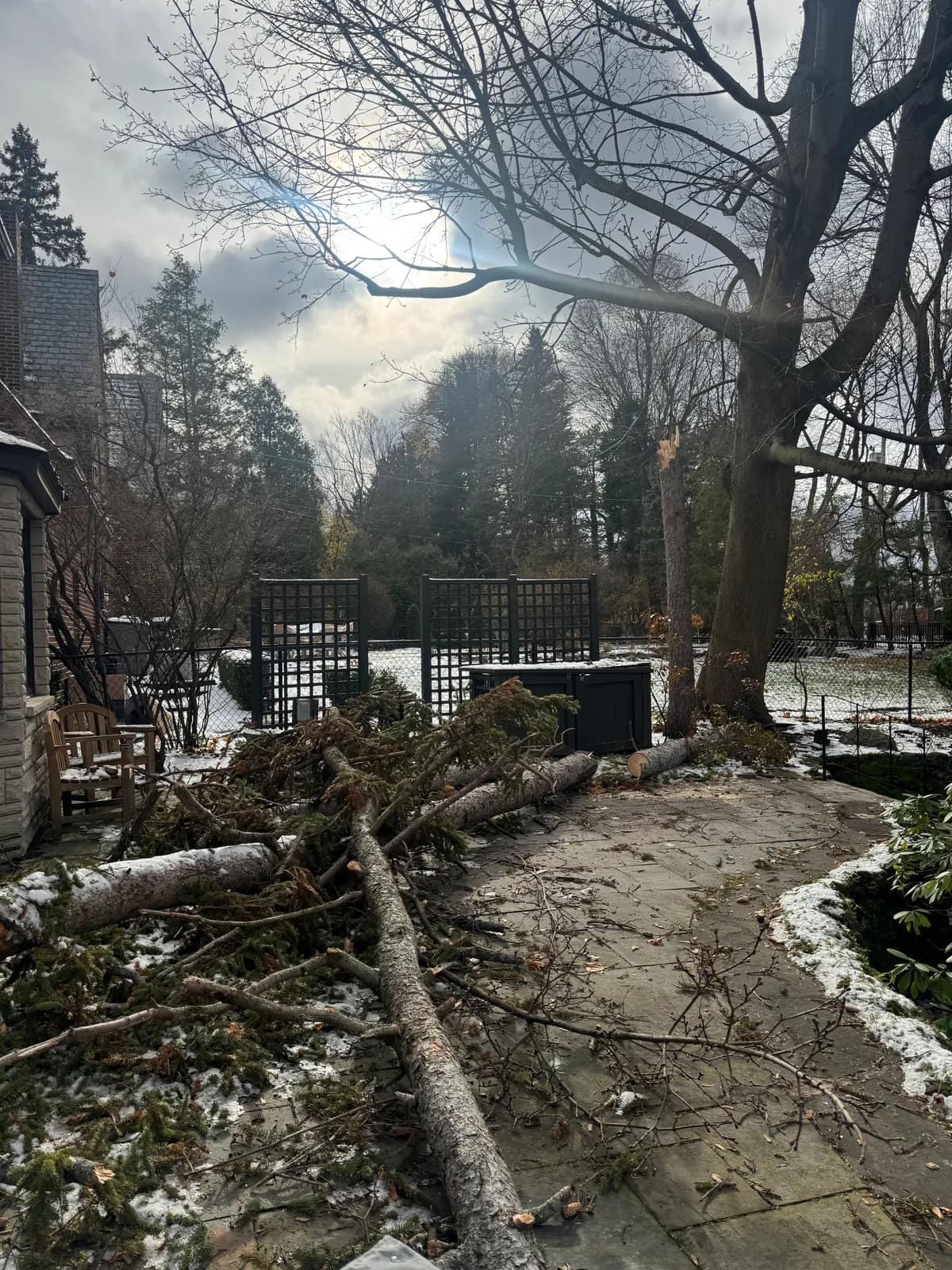
The key issue is not only whether the entire tree falls. Partial failures are common and expensive: major limbs through shingles, blocked driveways, damaged fences, and hazardous hangers over walkways. For dead tree fall winter buffalo ny, urgency rises when targets are close and condition is already advanced.
In this article
- Why dead wood fails differently in winter
- Snow and ice load dynamics in Buffalo weather
- Warning signs that should trigger immediate action
- Trim vs remove decision boundaries
- Practical pre-storm preparation for homeowners
- Frequently asked questions
Why Dead Trees Fail Faster in Cold Seasons
Brittle wood has less tolerance
Live wood can bend and recover under moderate load. Dead wood cannot. Once fibers dry and decay progresses, fracture resistance drops. That is why dead trees can shed large limbs in conditions that healthy trees tolerate.
Freeze-thaw amplifies existing defects
Cracks and cavities hold water. Repeated freezing expands these weak points, widening structural defects from inside out. By late winter, the same tree can be far less stable than it was in early fall.
In practical terms, dead tree fall winter buffalo ny risk climbs with each weather cycle, not only during one dramatic storm.
Snow Load, Ice Accretion, and Wind
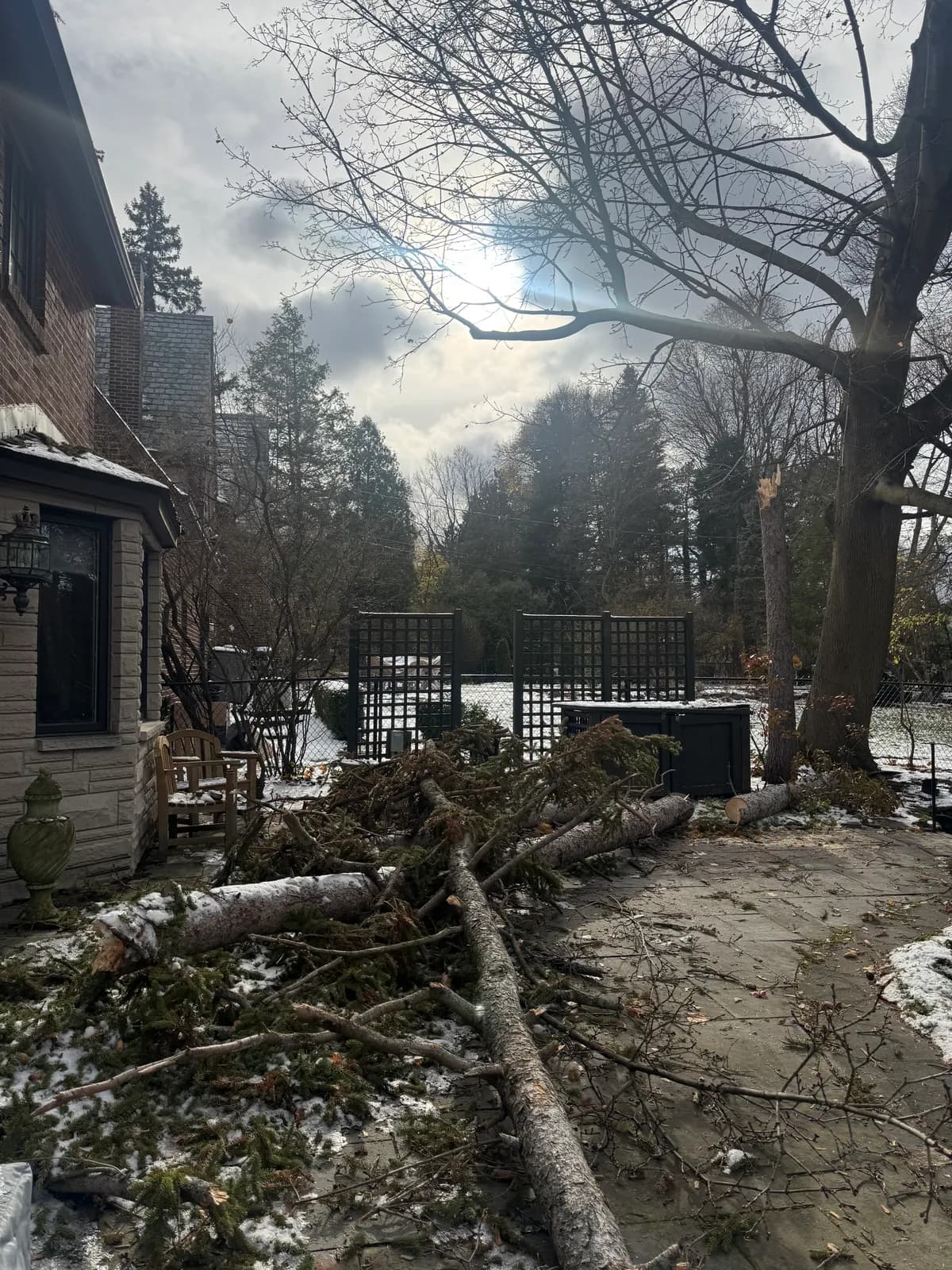
Buffalo sees heavy wet snow events that cling to branches and increase downward load rapidly. Ice accretion changes branch leverage and can trigger union splitting, especially in already dead or declining crowns.
When wind adds lateral force to brittle limbs, break probability increases sharply. If active hazards are present now, use24/7 emergency tree responsebefore discussing optional timeline preferences.
Signs You Should Not Delay
- large dead limbs over occupied spaces
- trunk cracks or visible decay at base
- bark sloughing with hollow response on tap
- repeated small branch drops after minor wind
- recent lean change or root disturbance
If multiple signs appear together, treat dead tree fall winter buffalo ny as a near-term safety project, not spring cleanup.
Buffalo Neighborhood Reality
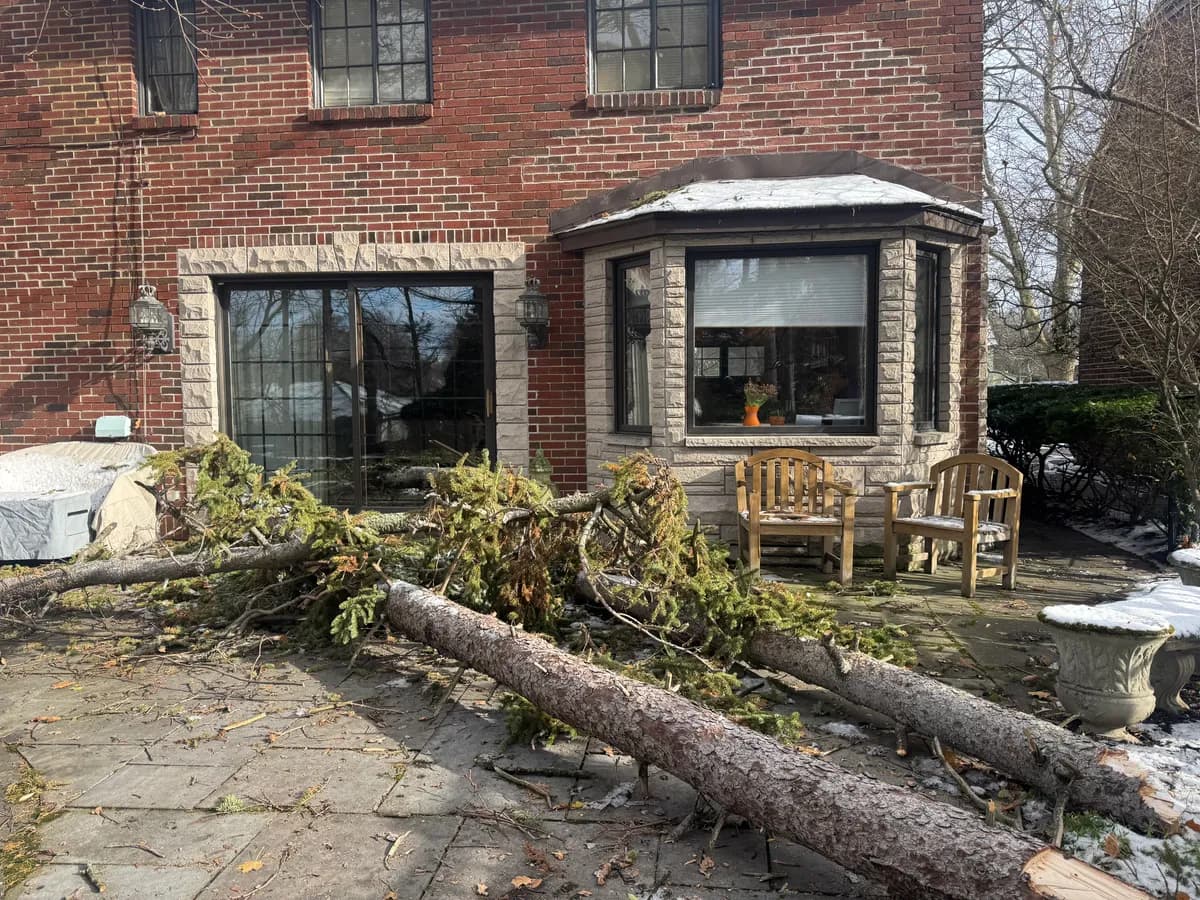
In older Buffalo and first-ring suburb lots, mature trees are often close to structures with limited drop zones. That means less margin for unpredictable failure. Tight access can also complicate winter removals once conditions worsen.
For local policy background, reviewCity of Buffalo tree regulations. For hazard-tree best practice, useISA arborist guidanceandUSDA Urban Forestry resources.
Trim vs Remove for Dead Trees
Trimming can reduce short-term exposure in limited cases
If death is isolated to a section and the main structure remains viable, selective hazard limb removal may buy time.
Removal is usually safer when decline is advanced
When trunk integrity is compromised or deadwood is widespread,professional tree removal in Buffalois typically safer than repeated interim cuts. Includecomplete stump grinding supportif site restoration is planned.
For broader planning,full-service local tree carecan prioritize multiple risk trees by urgency.
Homeowner Checklist Before Storm Windows
Move vehicles away from likely failure zones.
Photograph defects and branch overhang areas.
Avoid DIY ladder cuts on dead limbs.
Confirm written scope, insurance, and cleanup terms.
Prioritize highest-risk trees before major forecasts.
Verify local availability viaareas we serve across Western New York.
Conclusion
If your concern is dead tree fall winter buffalo ny, early action is usually safer and less expensive than emergency response after damage. Dead trees do not improve with time. A documented assessment now helps you control timing, scope, and risk before weather forces a harder decision.
Frequently Asked Questions
Can a dead tree stay standing for years without major issues?
Some do, but standing time does not equal safety. Structural reliability often declines unevenly, and failure can happen suddenly after weather stress.
Is winter removal harder or more expensive than summer?
It depends on site access, hazard level, and crew method. In many planned cases winter is manageable, but waiting until severe deterioration can raise complexity in any season.
Should I remove a dead tree even if it is not directly over my roof?
Yes, if it can impact driveways, sidewalks, fences, utility lines, or neighboring property. Risk is about all potential targets, not only the house roof.
Buffalo field scenario 1
A realistic local example of winter failure probability of dead stems helps explain why timing decisions matter. In this scenario, homeowners dealing with dead tree fall winter buffalo ny noticed gradual change after two weather cycles, then sharper progression after one high-wind event. The key lesson is that visible trend matters more than one-time appearance. By documenting condition, comparing two itemized scopes, and prioritizing life-safety targets first, the final plan reduced both risk and total disruption. For Buffalo-area lots, this method avoids reactive emergency decisions and keeps work aligned with access, cleanup, and long-term property use.
Another practical takeaway is communication. Owners who discuss drop zones, site protection, and cleanup details before work begins usually avoid most post-job disputes. When the team explains why trim, removal, or monitoring is recommended, homeowners can make confident decisions under pressure. This is especially important when dead tree fall winter buffalo ny involves structures, driveways, sidewalks, or neighboring boundaries where consequences are higher.
From a budgeting standpoint, staged planning is often better than deferral. Addressing highest-risk components first, then scheduling lower-priority corrections, usually costs less than emergency response after avoidable failure. In Buffalo conditions, that strategy is a reliable way to manage winter failure probability of dead stems while preserving safety and property function.
Buffalo field scenario 2
A realistic local example of winter failure probability of dead stems helps explain why timing decisions matter. In this scenario, homeowners dealing with dead tree fall winter buffalo ny noticed gradual change after two weather cycles, then sharper progression after one high-wind event. The key lesson is that visible trend matters more than one-time appearance. By documenting condition, comparing two itemized scopes, and prioritizing life-safety targets first, the final plan reduced both risk and total disruption. For Buffalo-area lots, this method avoids reactive emergency decisions and keeps work aligned with access, cleanup, and long-term property use.
Another practical takeaway is communication. Owners who discuss drop zones, site protection, and cleanup details before work begins usually avoid most post-job disputes. When the team explains why trim, removal, or monitoring is recommended, homeowners can make confident decisions under pressure. This is especially important when dead tree fall winter buffalo ny involves structures, driveways, sidewalks, or neighboring boundaries where consequences are higher.
From a budgeting standpoint, staged planning is often better than deferral. Addressing highest-risk components first, then scheduling lower-priority corrections, usually costs less than emergency response after avoidable failure. In Buffalo conditions, that strategy is a reliable way to manage winter failure probability of dead stems while preserving safety and property function.
Buffalo field scenario 3
A realistic local example of winter failure probability of dead stems helps explain why timing decisions matter. In this scenario, homeowners dealing with dead tree fall winter buffalo ny noticed gradual change after two weather cycles, then sharper progression after one high-wind event. The key lesson is that visible trend matters more than one-time appearance. By documenting condition, comparing two itemized scopes, and prioritizing life-safety targets first, the final plan reduced both risk and total disruption. For Buffalo-area lots, this method avoids reactive emergency decisions and keeps work aligned with access, cleanup, and long-term property use.
Another practical takeaway is communication. Owners who discuss drop zones, site protection, and cleanup details before work begins usually avoid most post-job disputes. When the team explains why trim, removal, or monitoring is recommended, homeowners can make confident decisions under pressure. This is especially important when dead tree fall winter buffalo ny involves structures, driveways, sidewalks, or neighboring boundaries where consequences are higher.
From a budgeting standpoint, staged planning is often better than deferral. Addressing highest-risk components first, then scheduling lower-priority corrections, usually costs less than emergency response after avoidable failure. In Buffalo conditions, that strategy is a reliable way to manage winter failure probability of dead stems while preserving safety and property function.