Homeowners hearing "we may need a crane" for crane tree removal Buffalo NY jobs often worry they are being upsold. Sometimes a crane is optional. Often it is the difference between a controlled lift and wood swinging into a roof or service drop. This guide explains when crane-assisted removal is truly needed, how it changes process and crane tree removal cost, and how it connects to general large tree removal cost in Buffalo NY pricing.
When a crane becomes necessary for tree removal
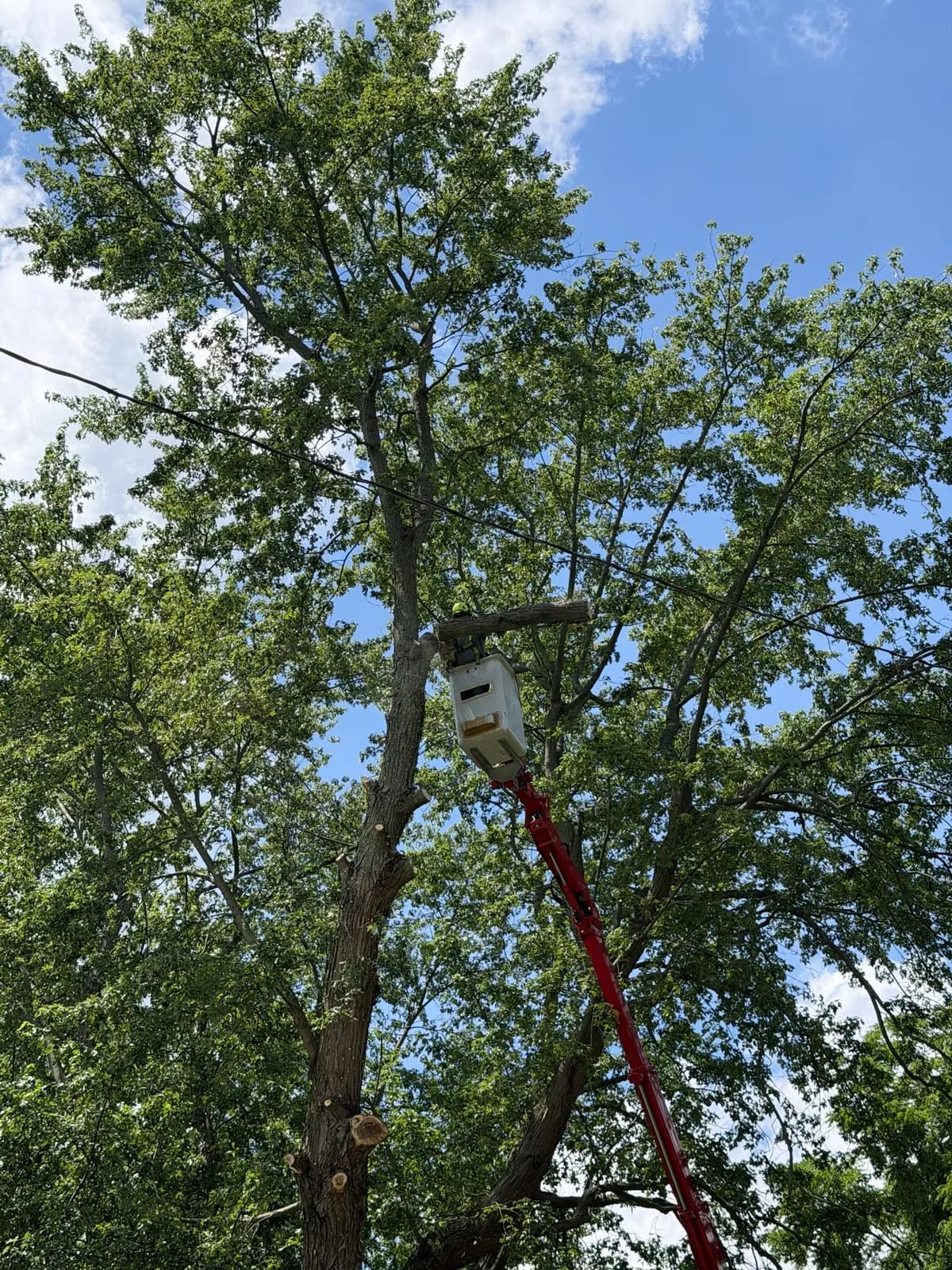
Standard removal uses climbing, aerial lifts, and rope-and-rigging to lower pieces into a clear zone. A crane enters the plan when that system cannot keep people and property safe — or cannot reach the wood at all.
- Very large or tall trees with sections too heavy for rope lowers alone
- No safe ground drop zone for rigging — wood has nowhere controlled to land
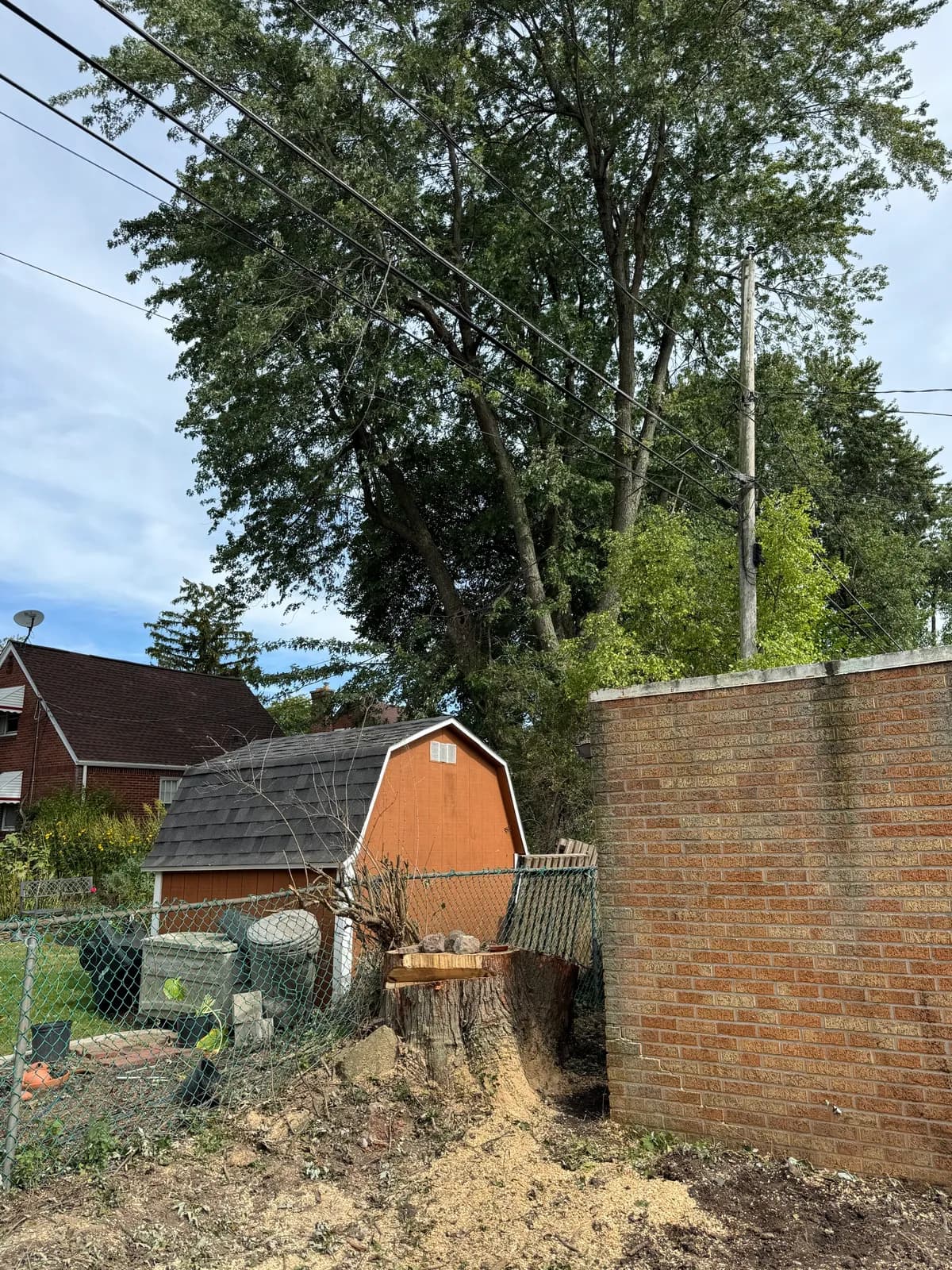
- Close proximity to houses, garages, decks, or neighboring structures
- Tree removal near power lines where vertical lift clears conductors better than sideways swings
- Dead, decayed, or brittle trees too dangerous to climb for long periods
That decision should come from an on-site assessment, not a phone guess. See what happens during a professional tree removal estimate for how crews evaluate access, targets, and equipment before quoting.
How crane-assisted removal changes the process
With a crane, cut sections are often attached and lifted vertically or along a planned path, then set in a landing zone for bucking and haul-away. Climbers or lift operators still make the cuts, but the crane carries the weight instead of relying only on friction devices and ground anchors. Setup takes longer — outriggers, radius checks, and sometimes street or driveway coordination — then cutting can move faster because large pieces leave the canopy as controlled loads.
- More planning and setup before the first cut
- Fewer free-falling or swinging sections over targets
- Often shorter time with a climber in compromised wood
- Landing zone and chipper/truck staging become part of the plan
How crane work affects cost vs. standard removal
Crane days add mobilization, operator time, and sometimes permit or traffic control costs, so crane-assisted jobs usually price above a standard large-tree dismantling. Use our large tree removal cost in Buffalo NY guide as the baseline for large-tree pricing, then expect crane tree removal cost to sit higher when lift capacity is required. Tree removal near power lines cost also rises when utility coordination or slower sectional work is part of the scope — with or without a full crane.
- Crane mobilization and hourly/day rate
- Extra ground crew for tag lines and landing
- Possible street or driveway staging constraints
- Utility coordination when lines are involved
Why a crane is often safer — not an upsell
In high-risk setups, skipping the crane to "save money" can mean more climber exposure, more uncontrolled swings, and more chance of property damage. Paying for the right tool is usually cheaper than repairing a roof, car, or fence. A trustworthy company will explain why the crane is on the quote and what would happen without it.
Credentials still matter alongside equipment. To verify arborist qualifications independently, find a TRAQ/ISA certified arborist.
Tight urban lots: crane vs. compact aerial options
Elmwood Village, North Buffalo, and similar dense neighborhoods often have the exact problems cranes solve — and the access limits that make crane placement hard. Sometimes a crane works from the street with a long reach. Sometimes a compact spider lift or bucket truck is the safer, more realistic fit. The right answer is site-specific, which is why crane tree removal Buffalo NY quotes should follow a walk-through, not a one-line phone price.
Buffalo Tree Soldiers plans crane-assisted and aerial-lift removals across Buffalo, Amherst, Cheektowaga, Tonawanda, West Seneca, and surrounding Western New York communities. If you have a large or high-risk tree, request a free estimate — we will tell you honestly whether a crane is needed, what it adds to the price, and what the safer alternative looks like on your lot.